Wine By-the-Glass: How to Increase Revenue and Reduce Waste
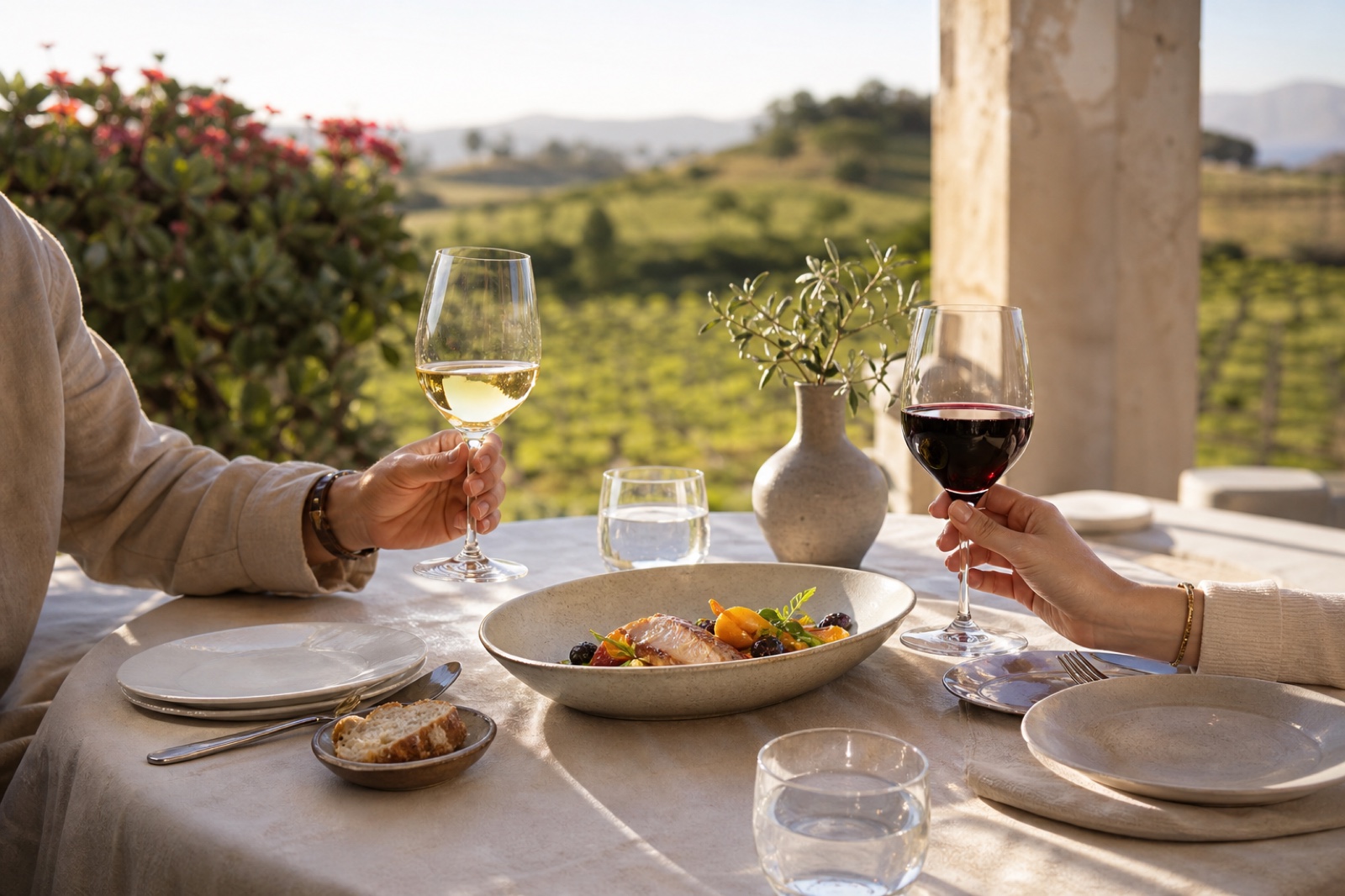
By-the-glass is the most underrated revenue strategy in the restaurant industry. A well-designed glass wine program increases your average spend per table, lowers the barrier to ordering wine, and gives you the flexibility to recommend a different wine per course. Yet most restaurants only offer a "house red" and a "house white."
In this article, we explain how to build a profitable by-the-glass program: which wines to choose, how to calculate pricing, how to prevent waste, and how to link it to food pairing to maximize revenue.
Why By-the-Glass Is a Revenue Machine
Let us start with the numbers. The average restaurant table where everyone orders a glass of wine instead of water spends 8-15 euros more per person. That is 32-60 euros more per table of four. Multiply that by 20 tables per evening and 25 evenings per month, and you are looking at 16,000-30,000 euros in additional monthly revenue.
But it is not just about selling more glasses. By-the-glass does three things simultaneously:
- Lowers the barrier: Not everyone wants a bottle. A glass is a small investment, low-commitment, and does not feel like a decision. Guests who "did not really want wine" still order a glass when it is easy.
- Increases spend: A guest who orders a different glass per course spends more than a guest sharing a bottle. Two glasses at 8 euros each is 16 euros -- more than their share of a 28-euro bottle.
- Enables pairing: By-the-glass is the only way to give guests a genuine pairing experience without requiring them to order three bottles.
Which Wines to Choose for By-the-Glass
Not every wine is suited for by-the-glass service. The ideal glass wine meets three criteria:
Criterion 1: Fast rotation
A wine offered by the glass must sell quickly enough that the bottle does not spoil. In practice, that means a minimum of 3-4 glasses per day for wines without a preservation system. Choose popular styles with broad appeal: a crisp Sauvignon Blanc, an approachable Merlot, a refreshing rose.
Criterion 2: Robust enough
Some wines are delicate and quickly lose their charm after opening. An aged Burgundy or a fine Riesling is beautiful at first pour but a shadow of itself after 24 hours. Choose by-the-glass wines that taste good for 1-2 days after opening: full white wines, structured reds, wines with good backbone.
Criterion 3: Versatile for pairing
Every by-the-glass wine should work with multiple dishes. A Gruner Veltliner with fish, salad, and Asian food. A Chianti with pasta, pizza, and grilled meat. The more versatile the wine, the more often your staff can recommend it.
The Ideal By-the-Glass Selection
For most restaurants, a selection of 8-10 wines by the glass works best. Here is a setup that covers the full menu:
- 1 Sparkling: Prosecco or Cremant as entry-level, Champagne as the premium option. Sparkling by the glass sells itself -- "a glass of bubbles" is the easiest upsell conversation.
- 2 White wines: 1 crisp and mineral (Sauvignon Blanc, Pinot Grigio, Gruner Veltliner) and 1 full and creamy (oaked Chardonnay, Viognier, white Rioja). This covers the entire white spectrum.
- 1 Rose: Year-round, but especially in spring/summer. Choose a dry, gastronomic rose -- not a sweet supermarket rose. Provence-style works best.
- 3 Red wines: 1 light and fruity (Pinot Noir, Beaujolais), 1 medium and versatile (Chianti, Rioja Crianza, Merlot), 1 bold and powerful (Malbec, Shiraz, Cabernet). Three reds is the minimum to offer a convincing recommendation with any meat dish.
- 1 Dessert or fortified wine: A Moscato d'Asti, a Sauternes, or a Port. Dessert wines by the glass are pure profit makers -- small portions, high price, low cost per serving.
Pricing: The Glass Pour Formula
By-the-glass pricing works differently from bottle pricing. The standard formula:
- Standard bottle: 750ml = 5 glasses of 150ml
- Glass price: Wholesale cost of bottle / 4 (not /5). After 4 glasses sold, you have covered your cost. The fifth glass is pure profit.
- Markup: 3-4x wholesale cost per glass is standard
An example: a bottle you buy for 8 euros. Glass cost = 8/4 = 2 euros per glass. At a 3.5x markup, you price the glass at 7 euros. 5 glasses = 35 euros revenue on an 8-euro bottle. That is a margin of 77%.
Preventing Waste: Preservation and Rotation
The biggest risk with by-the-glass is waste. An opened bottle that does not sell fast enough is a loss. Here is how to minimize it:
Preservation systems
- Vacuum pumps (VacuVin): 10-20 euros. Extends shelf life by 1-2 days. Basic solution for most restaurants.
- Nitrogen sprays (Private Preserve): 10-15 euros per can. Lays a protective nitrogen layer on the wine. More effective than vacuum.
- Coravin: 200-500 euros. Pours wine without removing the cork. Ideal for premium by-the-glass. An opened bottle stays good for weeks.
- Professional dispensers (Enomatic): 3,000-8,000 euros. Temperature-controlled wine dispensing with nitrogen preservation. For restaurants that invest seriously in by-the-glass.
Smart rotation
Analyze daily which bottles are open and for how long. A bottle that is still half-full after 2 days is a signal: either the wine does not sell well by the glass (replace it) or your staff is not offering it actively enough (train them). Track your waste -- the difference between 10% and 5% waste on your glass selection is thousands of euros per year.
By-the-Glass as a Pairing Tool
This is where it gets truly powerful. By-the-glass enables you to offer guests a pairing experience that is only possible with individual glasses. Three approaches:
Suggestion per dish
Your staff recommends a specific glass with each main course. "With the sea bass, I recommend our Gruner Veltliner -- crisp and mineral, just like the fish." This is the most direct approach and works best when your team is trained.
Pairing menu
Offer a 3-course pairing: 3 glasses matched to a 3-course menu, priced as a package. For example: 3 glasses for 22 euros (individual price would be 24-27 euros). The guest gets a wine pairing experience, you increase average spend by 22 euros per person.
Discovery flight
Offer a "tasting flight": 3 small glasses (100ml) of different wines for 15-18 euros. Ideal for guests who want to explore. Bonus: it often leads to a follow-up order of a full glass of the favorite.
Training Staff on Glass Sales
The difference between a restaurant that sells 200 glasses per week and one that sells 400 is often not the list -- it is the staff. Train your team on these three moments:
- On arrival: "May I start you with a glass of sparkling or an aperitif?" -- the opening that sets the tone.
- At ordering: "Our [specific wine] pairs beautifully with your dish -- shall I pour a glass?" -- the targeted recommendation.
- At dessert: "We have a lovely Moscato d'Asti by the glass that pairs very well with your chocolate cake." -- the closer that is often forgotten.
The key is being specific. "Would you like wine with that?" sells nothing. "With the lamb rack, I personally recommend our Rioja" sells everything.
Put your wine list on the menu with a QR code
Guests scan, pick their dish and see which wine from your list fits — in their own language. Start with the free wine list scan: you get an e-mail showing how many dishes your list covers and where the gaps are.
Free wine list scanFrequently Asked Questions
How many glasses are in a bottle of wine?
A standard 750ml bottle yields 5 glasses of 150ml. Some restaurants pour 125ml (6 glasses) or 175ml (just over 4 glasses). At 150ml, after 4 glasses sold you have covered your wholesale cost -- the fifth glass is pure profit.
How long does an opened bottle of wine last?
Without a preservation system: white wine 2-3 days, red wine 1-2 days. With a vacuum system up to 5 days. With nitrogen preservation (Coravin): weeks to months. The investment in a good system pays for itself quickly.
Which wines are best suited for by-the-glass?
Choose wines that rotate quickly, hold up well after opening, and work broadly for food pairing. Avoid delicate wines and expensive bottles unless you have a Coravin. The ideal by-the-glass wine sells at least 3 glasses per day.
Want to read more? Check out our guides on how to build a restaurant wine list and the 7 mistakes that cost restaurants money.