Restaurant Wine Pairing: What Works and What Doesn't
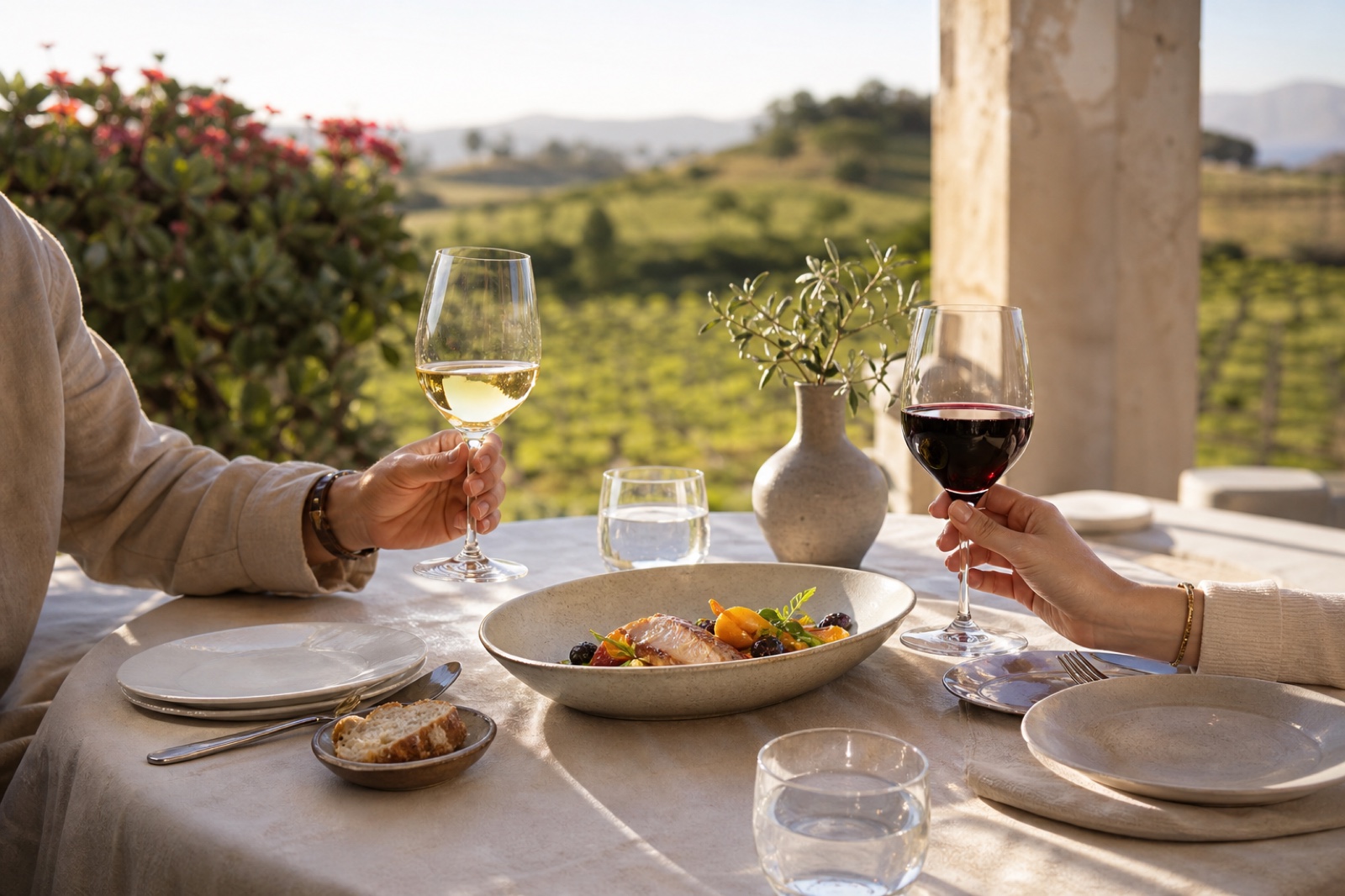
Wine pairing is the difference between a restaurant where guests order "a glass of wine" and one where they take a bottle because the waiter convinced them that a particular Chablis is excellent with the sea bass. The revenue difference is significant -- yet most restaurants leave this opportunity untapped.
In this article, we cover the most common mistakes restaurants make with food and wine pairing, the fundamental rules that always work, and how you can structurally increase wine sales with minimal investment.
The 5 Most Common Mistakes
Before we get to solutions, let us address the pitfalls. These are the errors we see across hundreds of restaurants -- from casual bistros to fine dining.
Mistake 1: Too much choice, no direction
A wine list with 80 wines and no connection to the food menu is not luxury -- it is chaos. The guest feels overwhelmed, asks the server "what do you recommend?", and the server who does not know the list says: "Everything is good." Result: the guest orders the second-cheapest bottle or just water.
Mistake 2: No match with the cuisine
An Asian-fusion restaurant with only French and Italian wines. A seafood restaurant with a wine list that is 70% red. It sounds absurd, but it happens more often than you think. Your wine list should strengthen your kitchen's identity, not stand beside it.
Mistake 3: No by-the-glass pairings
Not every guest wants a bottle. But if your only glass option is the house wine, you lose the opportunity for a personal pairing experience. By-the-glass is not just a revenue tool -- it is a way to introduce guests to wines they would never otherwise order.
Mistake 4: Ignoring seasonality
Recommending the same Barolo with a summer salad in July as with a game ragout in December. Seasonal pairings feel more natural and match guest expectations. In summer people want freshness, in winter warmth.
Mistake 5: Staff who do not know the list
The ultimate pairing killer. You can have matching wine-food combinations on your list, but if your team cannot explain them, they do not exist. This is by far the most common and most costly problem in the restaurant industry.
The Fundamental Rules that Always Work
Wine pairing does not have to be complicated. A handful of principles will take you far.
Rule 1: Match intensity
Light dish = light wine. Heavy dish = full wine. A carpaccio does not need an Amarone. An ossobuco does not need a Pinot Grigio. This is the most basic rule and the most effective. When in doubt, just match the weight class.
Rule 2: The sauce determines the wine
For 80% of restaurant dishes, the sauce matters more than the protein. Chicken with lemon butter sauce demands a different wine than the same chicken with mushroom sauce. Look at the sauce, not the protein.
Rule 3: Acid seeks acid
Dishes with acidic components (tomato, citrus, vinaigrette) need wines with good acidity. A Sangiovese with tomato-based pasta. A Sauvignon Blanc with a citrus vinaigrette salad. The wine's acidity must be at least equal to that of the dish -- otherwise the wine tastes flat and lifeless.
Rule 4: Fat neutralizes tannin
Fatty dishes soften tannic wines. That is why a bold Cabernet works so well with a fatty steak. And that is why the same Cabernet does not work with a lean chicken breast -- the tannins feel astringent and bitter.
Rule 5: Sweet with sweet (but the wine slightly sweeter)
With desserts, the wine must always be slightly sweeter than the dish. A dry wine with a sweet dessert tastes sour and bitter. A Sauternes with creme brulee, a Moscato d'Asti with a fruit tart. The wine should never be the less sweet of the two.
1 Wine per 3 Dishes: The Practical Approach
For most restaurants, the 1-to-3 rule is the most practical approach. This means that for every cluster of 3 dishes on your menu, you have at least 1 wine that pairs excellently and that your staff can recommend convincingly.
Here is how to do it:
- Group your dishes by flavor profile: light starters, meat mains, fish dishes, vegetarian, desserts
- Assign 1-2 wines per group that are versatile enough to work with multiple dishes
- Create a cheat sheet for your staff: for dish X recommend wine Y, for dish Z recommend wine A
- Train it in 30 minutes -- no more needed
This does not have to be sommelier-level pairing. It needs to be good enough to give the guest a better experience than "just the house wine." That alone is a world of difference.
Seasonal Pairings: Follow Your Kitchen's Rhythm
If your menu evolves with the seasons -- and it should -- then your wine recommendations need to follow. Seasonal pairings feel natural and give guests the sense that everything fits together.
- Spring: Asparagus + Gruner Veltliner. Lamb rack + Rioja. Salad + Sancerre.
- Summer: Grilled fish + Vermentino. BBQ + Zinfandel. Nicoise salad + Provence rose.
- Autumn: Mushroom risotto + Pinot Noir. Game + Chateauneuf. Pumpkin soup + Viognier.
- Winter: Braised beef + Malbec. Fondue + Chasselas. Chocolate dessert + Banyuls.
Adjust your by-the-glass selection each season. It does not need to be dramatic -- swap 2-3 wines per season and communicate the changes to your team and guests.
By-the-Glass as a Pairing Tool
The glass pour is the most powerful pairing tool you have. Not every table wants a bottle -- but almost every guest wants a good glass with their food. By-the-glass gives you the flexibility to suggest a different wine per course, without requiring the guest to commit to a full bottle.
The key is a curated selection of 6-8 wines by the glass that together cover the breadth of your menu. At minimum: 1 sparkling, 2 white, 1 rose, 3 red, 1 dessert/port. Each wine should play a role in your pairing story.
How to Train Your Staff in 30 Minutes
You do not need to give a sommelier certification course. A monthly 30-minute session is enough to keep your team sharp.
- Minutes 1-10: Taste 3 wines from the list. Have everyone describe what they taste in their own words.
- Minutes 10-20: Match each wine to 2-3 dishes from the menu. Explain why it works.
- Minutes 20-30: Practice the sales conversation. "Have you chosen a wine yet? Our Chablis pairs very well with the sea bass -- crisp, mineral, just like the fish."
Keep it fun, not academic. The goal is for your team to feel enthusiastic and confident making a recommendation.
Put your wine list on the menu with a QR code
Guests scan, pick their dish and see which wine from your list fits — in their own language. Start with the free wine list scan: you get an e-mail showing how many dishes your list covers and where the gaps are.
Free wine list scanFrequently Asked Questions
How many wines should you offer per dish?
The rule of thumb is 1 wine per 3 dishes that pairs well. You do not need a calculated match for every dish, but ensure your staff can always make at least 1 convincing recommendation. For a menu with 15 dishes, you need 5 strong pairings.
Should you print wine pairings on the menu?
It can help guests choose. You do not need to list a wine for every dish: start with your most popular dishes, keep each suggestion concise and measure the effect in your own restaurant.
Do seasonal pairings really work better?
Seasonal combinations keep the list aligned with the menu. Review the suggestions whenever the menu changes and use your own sales data to determine what works.
Want to read more? Check out our guide on how to build a restaurant wine list and the matching wine with steak.