How to Build a Restaurant Wine List: The Complete Guide
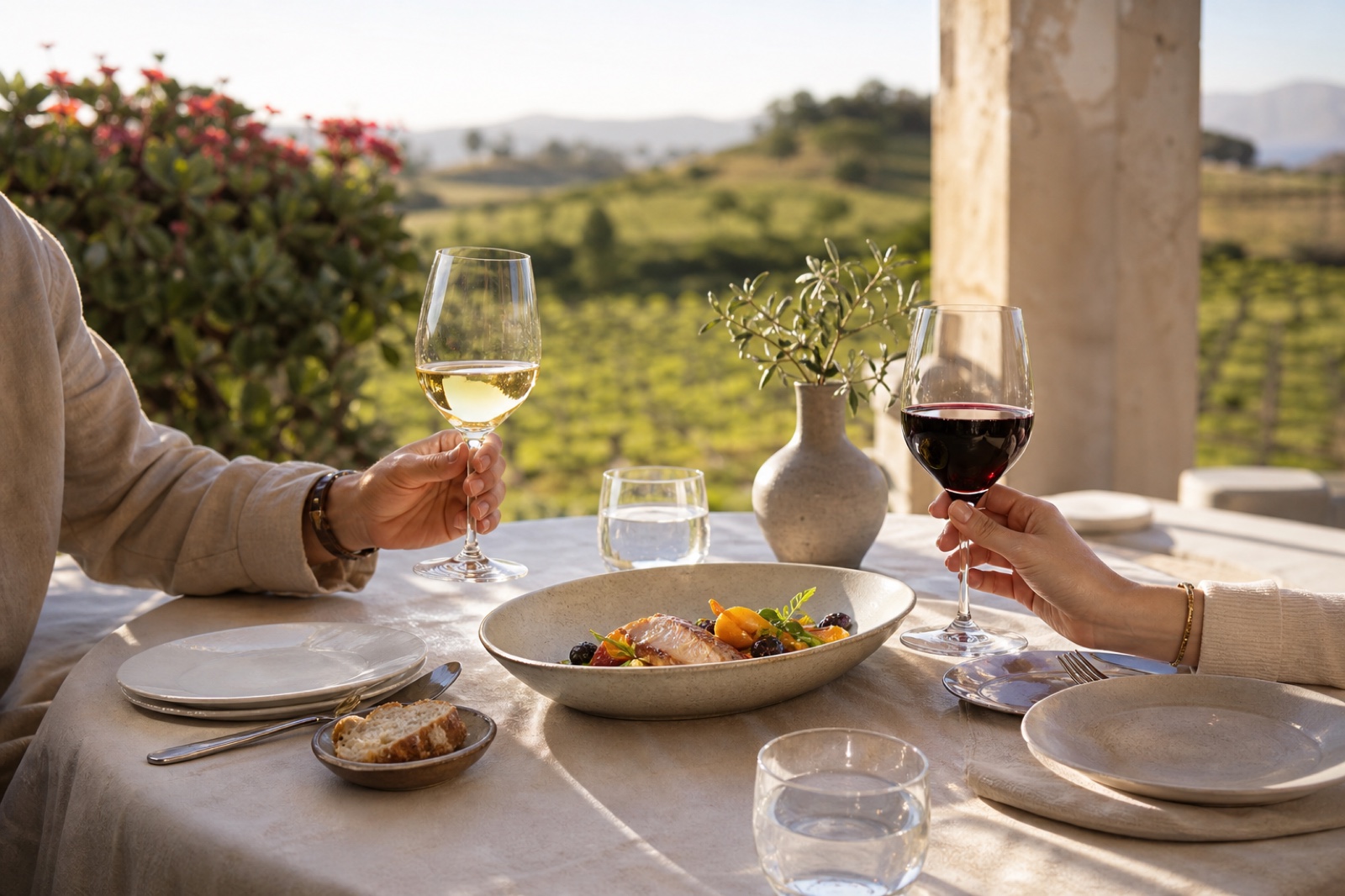
A great wine list is more than a catalogue of bottles with prices. It is a strategic tool that increases revenue, strengthens your kitchen's identity, and gives guests a memorable experience. Yet many restaurant owners struggle with the basics: too many options, wrong pricing, no connection to the food. The result? Guests default to the second-cheapest bottle and your premium wines collect dust.
This guide walks you through the complete process of building a restaurant wine list that actually works. From initial selection to seasonal rotation, from pricing strategy to staff training. Whether you run a casual bistro or a fine-dining establishment, the principles are universal.
Step 1: Start with Your Menu, Not the Wine
The biggest mistake restaurants make is building the wine list in isolation from the food. They buy wines they personally enjoy or that the distributor recommends, without checking whether they complement the kitchen. The result is a wine list that looks impressive but does not sell.
Always start with your menu. Which dishes sell the most? What are your signature items? What flavors dominate your cuisine -- Mediterranean, French, Asian, or modern European? Those answers determine the direction of your wine program.
Create a pairing matrix: list your dishes vertically and wine categories horizontally. Fill in which combinations work. The gaps reveal the wines you are missing. The overlap shows where you can trim.
Step 2: Build Your Selection with the 60-30-10 Rule
A balanced wine program roughly follows the 60-30-10 rule: 60% familiar, recognizable wines (the backbone), 30% interesting discoveries (the surprises), and 10% premium showstoppers (the prestige picks that elevate your list, even if they rarely sell).
The 60%: Familiar Foundation
These are wines your guests recognize or easily understand. Think a solid Sauvignon Blanc, an approachable Merlot, a crisp Pinot Grigio, a robust Malbec. They sell themselves and form the backbone of your revenue. Choose reliable quality at fair prices -- these are the bottles you reorder most frequently from your distributor.
The 30%: Surprises
This is where you differentiate. A Grillo from Sicily instead of yet another Pinot Grigio. A Blaufrankisch from Austria alongside your Cabernet. A Godello from Galicia as a Chardonnay alternative. These wines give your staff something to talk about and your guests a reason to return. They are also your upsell opportunity: guests who receive a surprising recommendation often order a pricier bottle.
The 10%: Premium Eyecatchers
Every list needs a few bottles that impress. A grand Barolo, an aged Bordeaux, a prestige Champagne. They may sell only a few times per month, but they do three things: they anchor the price perception upward (making mid-range wines seem affordable), they give your restaurant prestige, and occasionally a guest makes an evening of it.
Step 3: Pricing Strategy -- The Art of Markup
Your wine list pricing is where revenue is won or lost. The industry standard is a markup of 2.5 to 3 times the wholesale cost. A bottle you buy for 8 euros goes on the list at 20-24 euros. Sounds simple, but there are nuances.
- Entry-level wines (cost under 6 euros): Markup of 3-3.5x. These bottles are your volume sellers and need to rotate quickly.
- Mid-range (cost 6-15 euros): Markup of 2.5-3x. This is your sweet spot -- the highest absolute margin in euros.
- Premium (cost above 15 euros): Markup of 2-2.5x. A bottle costing 25 euros at 75 on the menu is realistic. At 100, nobody orders it.
Do not forget by-the-glass pricing. A standard bottle yields 5 glasses. Price a glass at 1/4 to 1/3 of the bottle price. After 4 glasses sold, you have covered your cost -- the fifth glass is pure profit, even if the bottle does not empty.
Step 4: Organization that Helps the Guest
How you organize your wine list determines how quickly a guest decides. And speed matters: the longer someone hesitates, the more likely they say "just the house wine." That is lost revenue.
There are three common approaches:
Option A: By Style
Light & Crisp / Round & Fruity / Bold & Complex. Works well for guests who do not know much about wine but know what they enjoy. "I want something bold" is easier than "I want a Cotes du Rhone." Downside: wine enthusiasts find it too vague.
Option B: By Region
France / Italy / Spain / New World. Traditional and clear. Works especially well if your restaurant has a defined culinary identity (an Italian restaurant naturally organizes by Italian regions). Downside: the guest needs to know that Sancerre is white and Barolo is red.
Option C: By Grape
Chardonnay / Sauvignon Blanc / Pinot Noir / Cabernet Sauvignon. Popular in New World-style lists. Advantage: everyone knows the major grape varieties. Downside: where do you place a blend? And Chateauneuf-du-Pape is not "Grenache" -- it is a blend of up to 13 possible grapes.
Our recommendation: combine style with color. Start with main categories (Sparkling, White, Rose, Red) and add a subtle style indicator per category ("light," "full," "bold"). This helps the novice while giving the connoisseur enough guidance.
Step 5: Seasonal Rotation -- A Living List
A wine list that stays the same all year is a missed opportunity. Seasonal rotation keeps your list fresh, aligns with your changing menu, and gives guests a reason to return.
- Spring: More rose, light whites, fresh reds (Beaujolais, Valpolicella). Sauvignon Blanc season.
- Summer: Rose dominates. Light, chilled reds. Sparkling for the patio. Fewer heavy reds.
- Autumn: Transition to fuller wines. Pinot Noir, Nebbiolo, autumnal whites (Viognier, oak-aged Chardonnay). Game season begins -- bolder reds.
- Winter: Full-bodied reds dominate. Barolo, Chateauneuf, Malbec. Port and dessert wines for the holidays.
You do not need to replace the entire list -- rotate 20-30% each season. Keep your bestsellers year-round and swap out the discoveries. Communicate the changes to guests: "New on the list" acts like a magnet.
Step 6: Staff Training -- The Forgotten Link
You can have the best wine list in the world, but if your staff does not know what is on it, nothing sells. Staff training is the highest-ROI investment you can make in your wine program.
It does not have to be complicated. Host a 30-minute tasting once a month featuring 3-4 wines from the list. Have staff describe what they taste -- not in technical jargon, but in words a guest understands. "This wine is bold with a hint of pepper" sells better than "concentrated Syrah with garrigue notes."
Also teach your team the two-choice technique: "Do you prefer crisp or full-bodied wines?" Then: "I'd recommend this one, or if you want something more special, this one." Two options, no overwhelm, always an upsell opportunity.
Step 7: Analyze and Optimize
Most restaurants build a wine list and only look at it again when something runs out. That is like creating a menu without ever checking your sales data.
Track which wines sell and which do not. After three months, you have enough data to make decisions:
- Top 20% sellers: Never run out of stock. Consider increasing inventory.
- Middle 60%: Evaluate each season. Does the wine still fit the menu? Is there a better option?
- Bottom 20%: Replace after the season. A wine that has not sold in three months does not deserve its spot.
Also monitor your by-the-glass ratio. If more than 60% of your wine sales are by the glass, you probably have too few attractive bottles or your staff is not encouraging bottle sales enough. A healthy ratio is 40% glass, 60% bottle.
Not sure where to start? A professional analysis of your current wine list gives you immediate insight into what works and what does not.
Put your wine list on the menu with a QR code
Guests scan, pick their dish and see which wine from your list fits — in their own language. Start with the free wine list scan: you get an e-mail showing how many dishes your list covers and where the gaps are.
Free wine list scanFrequently Asked Questions
How many wines should a restaurant wine list have?
Most restaurants do best with 30-50 wines. A bistro can work with 20, while fine dining may go up to 80-120. More important than the number is the balance: every wine should serve a purpose and complement your menu. Too much choice leads to decision paralysis and slow turnover.
What is the standard markup on restaurant wine?
The industry standard is 2.5 to 3 times the wholesale cost. For higher-end bottles (cost above 20 euros), you can reduce the markup to 2-2.5x to keep the menu price reasonable. By-the-glass wines can carry a higher markup (3-4x) due to the increased risk of spoilage.
How often should you update a restaurant wine list?
At minimum every season (4 times per year). In practice, you rotate continuously as wines sell out. But a full seasonal review -- checking whether the list still matches your menu, trends, and sales data -- should happen at least quarterly. The free SommelierX wine list scan shows in minutes where your list has gaps.
Want to read more? Check out our guides on wine pairing for restaurants and the 7 mistakes that cost restaurants money.