Wine List Optimization: 7 Mistakes That Cost Your Restaurant Money
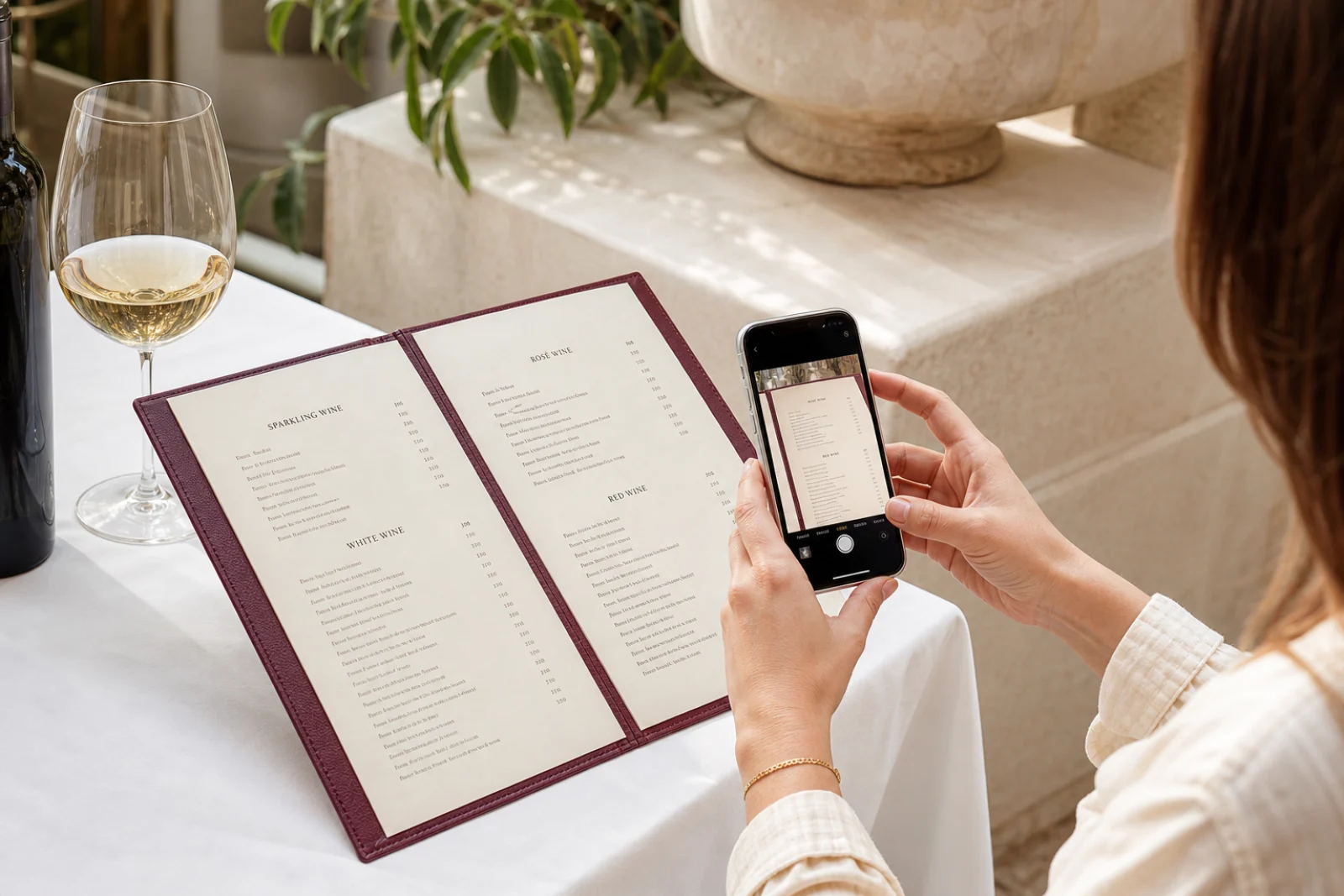
Your wine list is an important part of the restaurant experience. An unclear list makes choosing difficult; a well-structured list fits the menu and helps staff advise with confidence.
In this article, we cover the 7 most common mistakes on restaurant wine lists -- mistakes we see across hundreds of establishments, from neighborhood bistros to fine dining. For each mistake, we provide the fix. Recognize three or more? It is time for a wine list review.
Mistake 1: No Connection to the Menu
This is the most fundamental mistake and by far the most common. The wine list and the food menu exist in separate worlds. The chef cooks Asian-inspired cuisine, but the wine list is purely French and Italian. The seafood restaurant has more reds than whites. The vegetarian spot only offers heavy, oak-aged wines.
The problem is not that those wines are bad -- it is that they do not match what is on the plates. A guest who orders a light ceviche and sees only Barolo, Amarone, and Malbec on the list orders water.
Mistake 2: Too Much Choice
An 8-page wine list with 200 wines sounds impressive. In reality, it is a recipe for decision paralysis. Research consistently shows that too many options lead to fewer sales, not more. The guest feels overwhelmed, cannot decide, and reaches for the safe option: the house wine or no wine at all.
Moreover: keeping 200 wines in stock is a nightmare for your cash flow and your cellar. Bottles that sit for months are dead capital.
The sweet spot: 30-50 wines for most restaurants. A bistro can work with 20. Fine dining can go up to 80-100, but every item must earn its place. Less is more -- as long as the selection is thoughtful.
Mistake 3: Wrong Pricing Strategy
Wine list pricing is where the most money is lost. The two most common errors:
Mistake 3a: Uniform markup
Marking everything up 3x the wholesale cost sounds fair, but it is suboptimal. A bottle costing 5 euros at 15 on the list? Fine. A bottle costing 30 euros at 90? Nobody orders it. For more expensive wines, you need to reduce the markup to 2-2.5x to keep the price acceptable. The margin per bottle is lower, but the volume makes up for it.
Mistake 3b: The second-cheapest trap
Research shows guests rarely order the cheapest wine (feels stingy) but also not the most expensive. They almost always choose the second or third option. If your most profitable wines are not in those positions, you are leaving money on the table.
Mistake 4: No By-the-Glass Program
If your only glass options are house red and house white, you are missing one of your biggest revenue opportunities. By-the-glass is not just a service for guests who do not want a bottle -- it is a strategic sales tool.
With a thoughtful by-the-glass selection, you can:
- Offer a different wine per course -- a pairing experience without the commitment of a bottle
- Introduce guests to wines they would never order by the bottle
- Achieve higher margins -- by-the-glass can carry a 3-4x markup
- Test seasonal wines without large inventory risk
Minimum: 6 wines by the glass (1 sparkling, 2 white, 1 rose, 2 red). Ideal: 8-10, including a dessert or fortified wine.
Mistake 5: No Seasonal Rotation
A wine list that stays identical all year is like a restaurant that serves the same menu in July as in December. Technically possible, but a missed opportunity.
Seasonal rotation does three things for you:
- Matches expectations: Guests want freshness in summer and warmth in winter. A list that reflects this feels natural.
- Drives repeat visits: "New on the list" is a reason to come back. A static list does not provide that reason.
- Optimizes inventory: By buying seasonally, you avoid heavy reds gathering dust all summer.
Practical approach: Swap 20-30% of your list each season. Keep bestsellers year-round. Rotate the discoveries. Actively communicate changes to guests and staff.
Mistake 6: Staff Does Not Know the List
This is the most expensive mistake on this list -- and the easiest to fix. You can have the matching wine list with ideal pairings and smart pricing, but if your team does not know what is on it, it does not exist.
The reality in most restaurants: the server can name two or three wines, says "that one is also nice" for the rest, and for tough questions: "I'll ask the chef." The guest senses the uncertainty and orders the safe option.
It does not need to be excellent. A server who says "with the lamb rack I personally recommend this Rioja, it is full and spicy" sells 10x more than a server who says "everything is good."
Mistake 7: Never Analyzing Your Wine List
Most restaurants build a wine list and only revisit it when something runs out or the distributor calls. There is no data, no evaluation, no optimization. That is like running a shop without ever looking at your sales figures.
What you should be measuring:
- Sales per wine per month: Which bottles sell? Which ones sit?
- By-the-glass vs bottle ratio: A healthy split is 40/60. More than 60% glass? Your staff is not encouraging bottles enough.
- Revenue per category: Are you selling more white than red? Does that match your menu?
- Margin per wine: Your bestseller is not necessarily your most profitable wine.
- Seasonal trends: Which wines sell better in which season?
After three months of data, you have enough insight to act. Replace the bottom 20%, double the stock of the top 20%, and optimize the positioning of your most profitable wines.
Not sure where to start? Get your list professionally analyzed.
Put your wine list on the menu with a QR code
Guests scan, pick their dish and see which wine from your list fits — in their own language. Start with the free wine list scan: you get an e-mail showing how many dishes your list covers and where the gaps are.
Free wine list scanFrequently Asked Questions
How often should I evaluate my wine list?
At minimum every season (4 times per year). Review sales data, rotation per wine, and whether the list still matches your menu. The bottom 20% of your wines -- bottles that barely sell -- should be replaced quarterly.
How many wines should be available by the glass?
Minimum 6, ideally 8-10. Ensure at least 1 sparkling, 2 whites, 1 rose, 3 reds, and 1 dessert or fortified wine. Every by-the-glass wine should play a role in your pairing story.
What is the fastest way to increase wine sales?
Train your staff and place concise wine-pairing suggestions beside a few popular dishes. Then measure which recommendations guests use and how wine revenue per cover changes.
Want to read more? Check out our guides on how to build a restaurant wine list and what hiring a sommelier costs.