Digital Sommelier for Restaurants: Technology That Actually Works
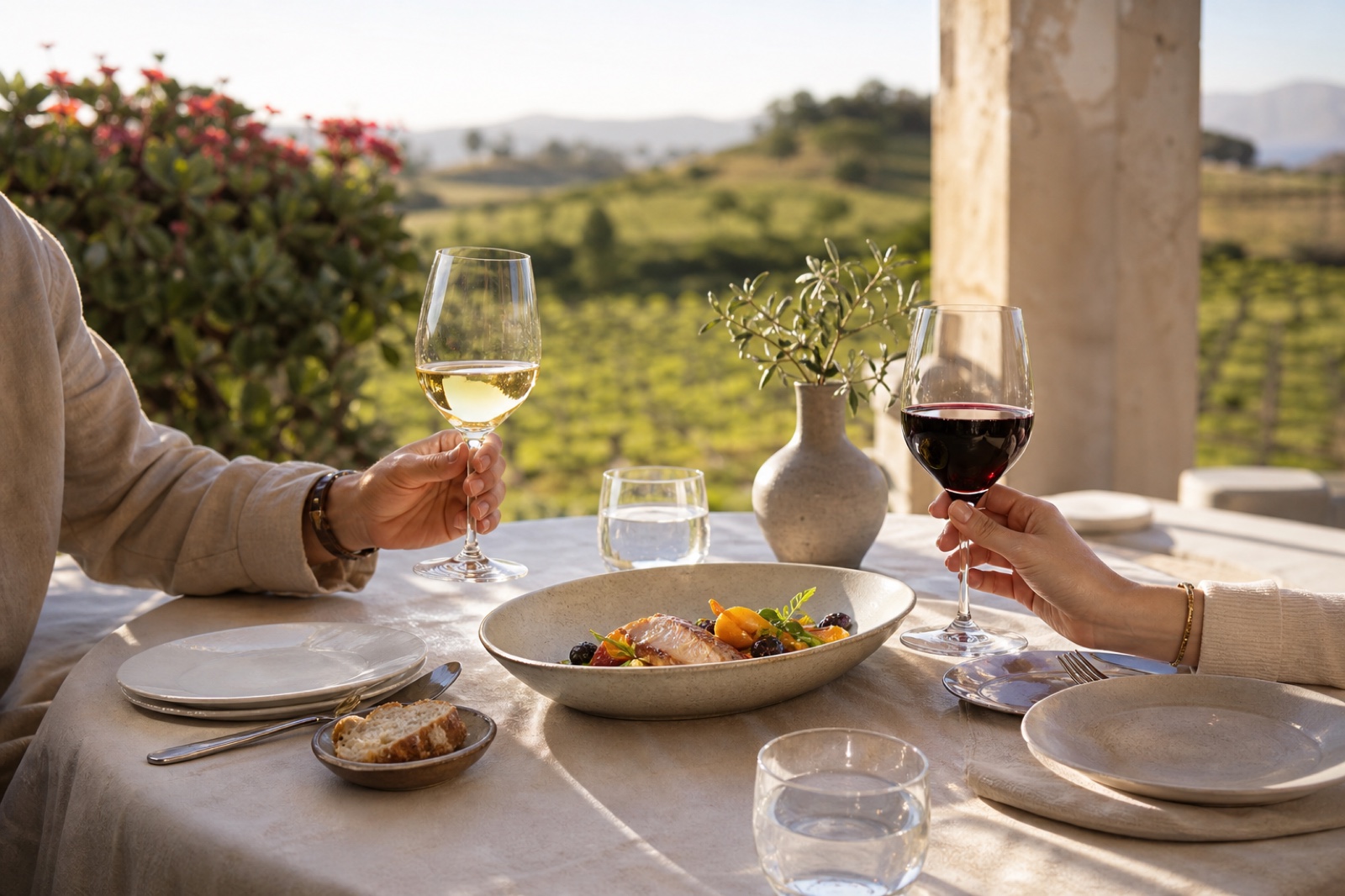
The term "digital sommelier" is appearing more frequently in the restaurant world. But what exactly is it? An app that guests use at the table? Software for your team? An algorithm that optimizes your wine list? The answer: it can be all of these, depending on the tool and the goal.
In this article, we explain what a digital sommelier does, how it differs from a human sommelier, when it makes sense for your restaurant, and how a concrete solution like the guest sommelier with a QR code works in practice.
What Is a Digital Sommelier?
A digital sommelier is technology that provides wine advice based on data rather than (only) human experience. It can take the form of an app, a website, an API, or an analysis tool. The core is always the same: it uses information about wines, dishes, and flavor profiles to make recommendations.
There are roughly three categories:
- Consumer apps: Apps that help consumers choose wine with their meal. Think SommelierX -- the guest enters their dish and receives a personalized wine match.
- Restaurant tools: Software that helps restaurant owners analyze and optimize their wine list. The focus is on revenue, pairings, and assortment.
- Hybrid solutions: Combinations that serve both the guest and the restaurant. For example, a QR code on the table that lets guests discover pairings themselves.
Human vs Digital Sommelier: The Honest Comparison
Let us be honest: a digital sommelier does not replace a great human sommelier. But the question is whether your restaurant can afford a full-time sommelier -- and whether that is the best investment for your situation.
Where the human sommelier wins
- Hospitality: A sommelier reads the table, senses the mood, and adapts advice to the moment. "This is a celebration? Then this Champagne." No algorithm can do that.
- Storytelling: "This wine comes from a family estate in the Barossa Valley, the winemaker is 82 and still does everything by hand." Stories sell.
- Flexibility: A sommelier can improvise on the spot for unexpected situations -- a guest with allergies, a sold-out wine, a special request.
- Relationship-driven upsell: A sommelier who recognizes a guest and remembers what they ordered last time builds loyalty that no technology can match.
Where the digital sommelier wins
- Cost: A sommelier costs 2,500-4,000 euros per month. A digital tool costs a fraction of that. For many restaurants, it is the only feasible option.
- Consistency: An algorithm delivers the same quality level regardless of the moment, the rush, or the day. No bad days, no forgotten training.
- Scalability: A sommelier can serve 1 table at a time. A digital tool can advise 100 tables simultaneously.
- Data: A digital sommelier learns from thousands of pairings and hundreds of thousands of data points. No human memory can match that.
- Availability: 24/7, even on busy Saturday evenings when your sommelier is already attending to 3 tables.
When Does Your Restaurant Need a Digital Sommelier?
Not every restaurant has the same needs. Here are the scenarios where a digital sommelier makes the biggest difference:
Scenario 1: You have no sommelier and no budget for one
This is the most common situation. Most restaurants do not have a sommelier on staff. The team does its best but lacks the knowledge to make convincing wine-food recommendations. Result: lost revenue. A digital tool gives your team the knowledge it lacks -- in a format they can use immediately.
Scenario 2: You want to optimize your wine list but do not know how
Your wine list has existed for years and you know there is room for improvement, but you have no idea where to start. Which wines are not selling? Which pairings are you missing? Is your pricing strategy optimal? An analysis tool gives you those answers.
Scenario 3: You want to offer guests a premium experience
A QR code on the table that lets guests discover wine-food pairings themselves adds an interactive layer to the dining experience. It does not replace personal contact but enriches it -- especially for guests who enjoy self-discovery.
Scenario 4: You have a sommelier but want data-backed insights
Even with an excellent sommelier, data can help. Which recommendations lead to the highest sales? Which seasonal trends can you leverage? A digital tool gives your sommelier insights that intuition alone cannot provide.
How Does a Guest Sommelier with a QR Code Work?
The most concrete form of a digital sommelier is a QR code on the menu. Here is how it works at SommelierX:
- Step 1: You sign up and pay EUR 29 per month, cancel any month
- Step 2: You upload your wine list (photo, PDF or text); the system recognises your wines and links each one to 19 wine dimensions
- Step 3: You receive the table card with the QR code by email, ready to print or place on the menu
- Step 4: The guest scans, picks or types the dish and sees the three wines from your list that fit best, with the reason, in their own language
- Step 5: Menu changes? Add today's dishes from your phone; your team gets the best wines per dish by email
Want to know first whether your list covers your menu? The free wine list scan emails you how many dishes your list covers and where the gaps are.
The Technology Behind the Advice
What distinguishes a good digital sommelier from a simple "red wine with meat" tool is the depth of data. At SommelierX, the Wine DNA system works with 19 wine dimensions per wine style: from acidity and tannin to oak aging, fruit profile, and mineral content.
The same applies to dishes. Every dish is analyzed for preparation method, dominant flavors (salt, sweet, acid, bitter, umami), fat content, seasoning, and texture. The pairing score is not a simple "match/no match" -- it is a nuanced calculation that accounts for how well a wine pairs with a dish, and why.
This is the same methodology that an experienced sommelier applies intuitively -- but codified, scalable, and consistent.
Cost and result
The guest sommelier costs 29 euros per month, cancel monthly. Your team gets the service card with it: the best wines from your list per dish, a check of gaps and balance, and directions for suitable wine styles — refreshed at every menu change.
SommelierX does not promise a fixed revenue increase. Measure wine revenue per cover, the share of tables ordering wine and which recommendations staff actually use. This lets you judge value using your own list and guests.
Put your wine list on the menu with a QR code
Guests scan, pick their dish and see which wine from your list fits — in their own language. Start with the free wine list scan: you get an e-mail showing how many dishes your list covers and where the gaps are.
Free wine list scanFrequently Asked Questions
How much does a digital sommelier cost for a restaurant?
The SommelierX guest sommelier costs 29 euros per month, cancel monthly. Staffing and consultancy costs vary widely by country, experience and restaurant type; the digital sommelier is therefore a tool on the table, not a replacement for hospitality or human wine knowledge.
Does a digital sommelier replace a human sommelier?
No, they are complementary tools. A digital sommelier is ideal for restaurants that cannot afford a full-time sommelier, or as a supplement to existing wine knowledge. The human factor -- hospitality, storytelling, reading the room -- remains irreplaceable.
How does the guest sommelier with a QR code work exactly?
Photograph your wine list. We read the wines and e-mail you a table card and stickers with your QR code. Guests scan, pick their dish and see which wine from your list fits. Learn more on the restaurants page.
Want to read more? Check out our articles on what hiring a sommelier costs and the digital sommelier explained.