What wine goes with langoustines?
Data-driven wine advice from SommelierX
Get your wine for this dishFree · right in your browser
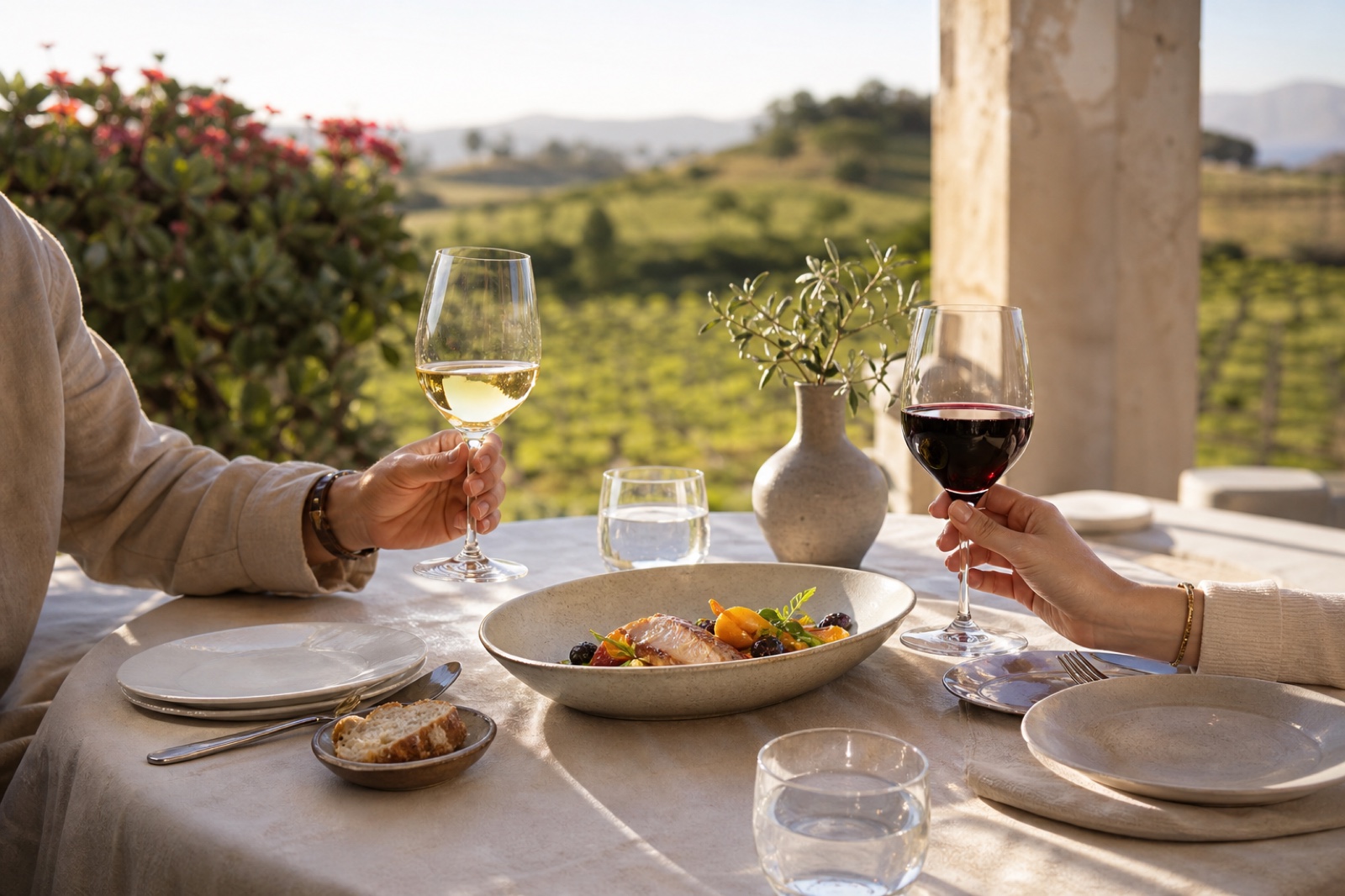
The matching wine with langoustines depends on how the dish tastes, not on a rule of thumb. Langoustines, butter and the preparation together form a flavour profile you can measure. That is what we do with the Wine DNA: a translation of the dish into flavour axes, after which the algorithm finds matching wine styles. It yields a clear, reasoned choice instead of doubt at the wine rack. See the profile of langoustines below, the top-scoring wines and concrete serving advice.
The Wine DNA of langoustines
The Wine DNA of langoustines shows a clear profile: Acidity and savoury are the strongest flavour axes. Our algorithm translates this flavour balance into wines whose own DNA axes — acidity, tannin, body, fruit and spice — complement the dish rather than overpower it. The higher an axis below, the more that taste defines the dish and the more precisely the wine selection responds to it.
Flavour profile (0-5)
Top 5 wines with langoustines
Bourgogne white – Chablis (Yonne) · Chablis & Petit Chablis
White wine · Bourgogne, FranceChardonnay from Burgundy, France: the fresh acidity keeps every bite lively and the mineral tension keeps the finish taut, a logical match for the fresh acidity of langoustines.
Verdejo Spain
White wine · SpainVerdejo from Spain: the fresh acidity keeps every bite lively and the ripe fruit lays a round layer over the dish, a logical match for the fresh acidity of langoustines.
Graves and Pessac-Léognan blanc
White wine · Bordeaux, FranceMuscadelle from Bordeaux, France: the fresh acidity keeps every bite lively and the ripe fruit lays a round layer over the dish, a logical match for the fresh acidity of langoustines.
Bordeaux blend white Europe
White wine · EuropeColombard from Europe: the fresh acidity keeps every bite lively and the ripe fruit lays a round layer over the dish, a logical match for the fresh acidity of langoustines.
Bordeaux and Bergerac blanc with wood ageing
White wine · Southwest, FranceMuscadelle from Southwest, France: the fresh acidity keeps every bite lively and the ripe fruit lays a round layer over the dish, a logical match for the fresh acidity of langoustines.
What ties this selection together: the fresh acidity of langoustines leads, and every recommended wine answers that flavour axis in its own way — one with structure, another with fruit or freshness. So you do not get a single "correct" bottle, but a range that all start from the same flavour principle. Choose by colour, price or occasion; the match with the dish is reasoned in every case.
Serving tips
Match the intensity: the richer langoustines is on the plate, the fuller the wine may be.
Torn between two wines? Pick the one with the highest score above — it aligns most tightly with the profile.
Do not serve white wine with langoustines too cold — around 10-12°C the aromas show best.
Frequently asked questions
Which wine pairs best with langoustines?
Based on the Wine DNA, Bourgogne white – Chablis (Yonne) · Chablis & Petit Chablis from Burgundy, France scores as the best match with langoustines, with a pairing score of 90. That is because the wine aligns with the fresh acidity that characterises this dish.
Does white wine go with langoustines?
Yes. Bourgogne white – Chablis (Yonne) · Chablis & Petit Chablis (Burgundy, France) is an excellent white choice here that keeps the dish fresh.
Is Chardonnay a good grape with langoustines?
Chardonnay tops our list for langoustines, precisely because the grape profile measurably matches the dish's flavour balance.
Discover your calculated wine match
Scan your label or enter your dish and instantly see whether this bottle fits langoustines — free, with a score.
Open SommelierXOr get the app: