Helping Customers Choose: Wine Advice Without a Sommelier on the Floor
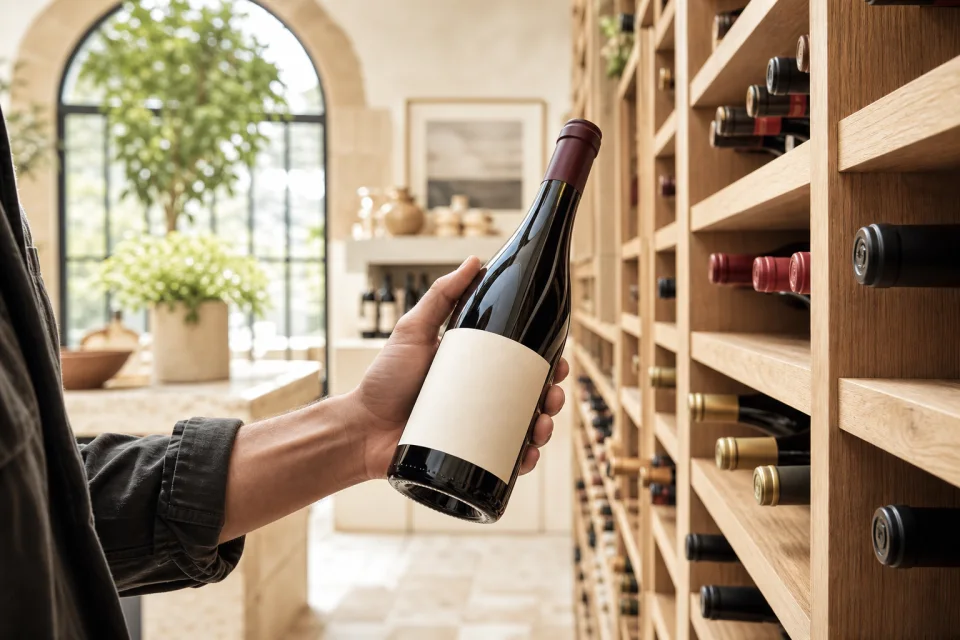
It is Saturday afternoon. The shop is packed and three customers are standing in front of the wine shelf at the same time. One picks up a bottle, turns it around, reads the back label, and puts it down. Another is looking for something for a dinner party tonight. The third just wants "something nice." And you are behind the counter, ringing up purchases.
This scene plays out every day in hundreds of wine shops across Europe and beyond. The problem is not that your team is bad -- the problem is that delivering wine advice at the right moment is physically impossible when you do not have enough hands. And a full-time sommelier? For most shops, that is financially out of reach.
In this article, we explore how you can still help customers make the right choice, even when there is no wine expert on the floor. From smart shelf organization to digital tools that do the heavy lifting.
The Real Problem: Choice Overload at the Wine Shelf
Research on consumer behavior in specialty retail shows the same pattern over and over: the more choice, the fewer people buy. The famous "jam experiment" by Sheena Iyengar proved that a table with 6 varieties of jam generated six times more sales than a table with 24 varieties. With wine, this effect is even more pronounced.
An average wine shop stocks 200 to 800 different wines. Without guidance, that is not an assortment -- it is a minefield. Customers who do not know what to choose typically do one of three things:
- They choose by price -- the 7-euro bottle, not because it is the best match, but because it feels "safe"
- They choose by label -- a beautiful design wins over a great wine
- They leave without buying -- the worst outcome for any retailer
The common thread behind all three: lack of information at the moment of decision. The customer has no context, no story, no reason to pick one bottle over another. That is exactly what a sommelier would solve -- but there is no sommelier.
What a Sommelier Actually Does (and How to Replace It)
Let us be honest: a sommelier does more than recommend wines. A good sommelier reads the customer. They ask three questions -- "What are you eating tonight?", "How much do you want to spend?", "Do you prefer dry or fruity?" -- and translate those answers into a personal recommendation.
Those three questions contain the essence of good wine advice. And that essence is reproducible without a human expert, if you put the right systems in place:
1. Shelf cards with pairing suggestions
Instead of only showing the name, region, and price on your shelf card, add: "Pairs with: grilled chicken, risotto, soft cheeses." This costs nothing extra but gives the customer immediate context. A wine that "goes with pasta in tomato sauce" is more concrete than a wine that is "fruity and medium-bodied."
2. Theme displays by occasion
Group wines not only by country or grape, but by occasion: "Drinks with friends," "Sunday lunch," "Romantic dinner," "Garden BBQ." Customers do not think in grape varieties -- they think in moments. By organizing your shelf around moments, you eliminate a huge layer of choice overload.
3. A digital sommelier via QR codes
This is where technology makes the difference. A QR code on the shelf or bottle that the customer scans with their phone, showing food-pairing suggestions, flavor profiles, and taste matches. The customer gets in 10 seconds what a sommelier tells in 2 minutes -- and you do not need to be there.
Why Training Staff Is Not Enough
The obvious solution is: train your staff. And that is certainly valuable. But it has three fundamental limitations:
- Turnover -- In retail, staff changes regularly. Every new employee needs to be trained again, and that knowledge builds slowly
- Availability -- Even a trained employee can only help one customer at a time. During peak moments, the system still breaks down
- Depth -- A wine assortment of 400 bottles requires deep knowledge. Most shops have staff who know 30-50 wines well. The rest is "that red from Spain, I think"
Training is a supplement, not a solution. The real solution is a system that is always available, knows every wine, and does not require a salary.
Digital Tools: From Gimmick to Sales Instrument
Five years ago, QR codes in a wine shop were a gimmick. Now they are a proven sales instrument. The reason? Smartphones are second nature to everyone, and consumers expect to find information at their own pace.
The most effective digital tools for wine shops combine three elements:
- Pairing information -- Which dishes go with this wine? This is what customers want to know most
- Flavor profile -- Is this wine dry, fruity, heavy, light? Displayed visually, not in wine-snob language
- Social proof -- How do other customers rate this wine? Ratings and short reviews lower the barrier
SommelierX offers exactly this combination. Shops place QR codes on the shelf that link to the platform. Customers scan, receive food-pairing suggestions based on 19 wine dimensions and 17 dish dimensions, and make an informed choice. No app download needed, no account required.
The Numbers: Sommelier vs Digital Solution
Let us put the figures side by side honestly:
- Part-time sommelier (20 hours/week): 2,000-4,000 euros per month, excluding social charges. Available during working hours. Can help one customer at a time
- Freelance wine trainer (for staff): 500-1,500 euros per session. One-time effect that fades over time. Staff changes
- QR code system with wine data: 50-200 euros per month. Available 24/7. Helps unlimited customers simultaneously. Scales with your assortment
The math is simple. But it is not just about cost -- it is about availability. A digital tool is there on Saturday at 5 PM when the shop is overflowing, and on Monday at 10 AM when one employee is working alone. It is a layer that is always active, regardless of staffing.
Implementation: From Zero to Wine Advice in 15 Minutes
Most shop owners think digital tools are complicated. But the implementation is surprisingly simple:
Step 1: Select your top wines
Do not start with your entire assortment. Pick the 20-30 wines that sell most or have the highest margin. These are the bottles where extra information has the most impact.
Step 2: Generate QR codes
Platforms like SommelierX automatically generate QR codes for your assortment. Each code links to a page with flavor profile, pairing suggestions, and product information. You do not need to write anything yourself.
Step 3: Place the codes at the shelf
Print the codes on small cards or stickers and place them next to the wines. Add a simple instruction: "Scan for food pairing tips." Customers understand immediately.
Step 4: Measure the results
After two weeks you have data: how many scans per wine, which wines are viewed most, which pairings are most popular. That data tells you more about your customers than months of observation.
What You Lose (and What You Gain)
Let us be honest: a digital tool does not replace everything a human sommelier offers. The personal connection, reading body language, telling the story about a winemaker you personally visited -- that is irreplaceable.
But that is also not what most customers need. 80% of customers want a simple answer to a simple question: "Which wine goes with what I am cooking tonight?" For that, you do not need a human expert. You need data, a smart algorithm, and a way to present that information at the right moment.
What you gain:
- Consistency -- Every customer gets the same quality of advice, regardless of who is working
- Scalability -- Ten customers at the wine shelf simultaneously? No problem
- Data -- You learn what your customers are looking for, improving your assortment and marketing
- Higher average spend -- Customers with context more often choose a pricier bottle
Frequently Asked Questions
How can I help wine customers without an expert on staff?
Use shelf cards with pairing suggestions, theme displays organized by occasion, and QR codes that link to digital wine profiles. Tools like SommelierX provide instant food-pairing advice, taste profiles, and ratings without requiring staff expertise. Your team only needs to point to the QR code.
Do QR codes actually work in a wine shop?
Yes. Customers who receive product information at the point of purchase are significantly more likely to buy. QR codes deliver that information at exactly the right moment. The key is placement at eye level and a clear call-to-action like "Scan for food pairing tips."
What does it cost to hire a sommelier for a wine shop?
A part-time sommelier costs roughly 2,000 to 4,000 euros per month. Digital alternatives like QR-based wine advice cost a fraction of that and are available 24/7, including busy Saturdays when staff is scarce.
Wine advice in your shop without extra staff?
SommelierX offers QR codes with pairing suggestions, flavor profiles, and food matches for your wine shelf. Set up in 15 minutes.
Explore options for shops