Wine Product Descriptions That Sell: Tips + Examples
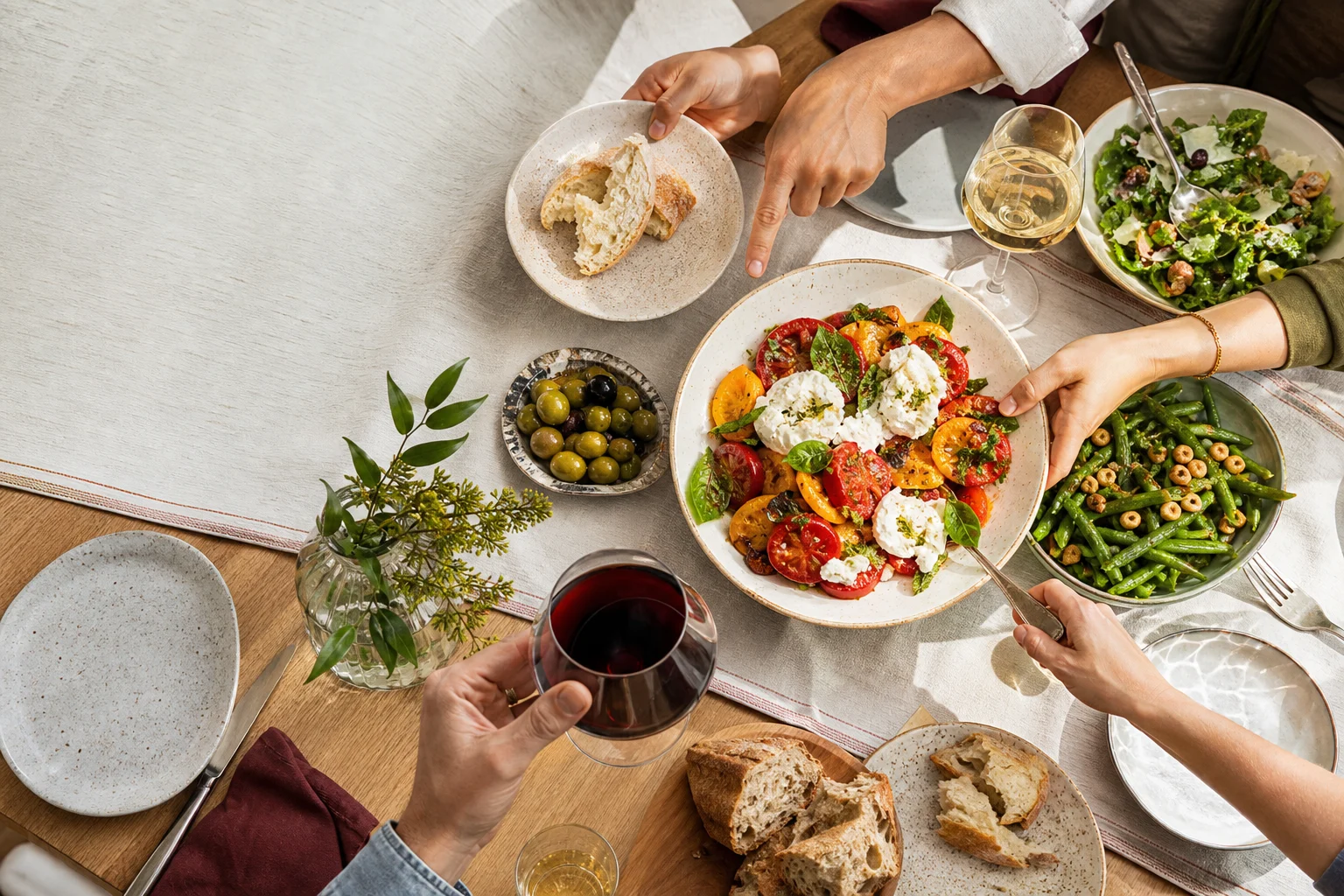
Most wine product descriptions on webshops are written by wine experts, for wine experts. "Complex nose with notes of cassis, cedarwood, and a hint of graphite. Full body, structured tannins, long finish." Beautiful -- if you're a sommelier. But 90% of your customers are not sommeliers. They want to know: does it taste good? Does it go with my food? Is it worth the price?
In this article, we show you how to write wine product descriptions that sell. With concrete examples of bad versus good copy, a reusable structure, and the smart shortcut that handles food pairing automatically.
Why Most Wine Product Descriptions Don't Work
The problem isn't that wine descriptions are poorly written -- the problem is that they're written for the wrong audience. The average wine buyer on a webshop isn't an expert. It's someone making pasta tonight and wanting a nice wine to go with it. Or someone looking for a birthday gift. Or someone hosting a dinner party and not wanting to look foolish.
These customers are put off by jargon. "Tannins" means nothing to them. "Graphite on the nose" sounds like a defect. "Long finish" could mean anything. And most importantly: they're missing the answer to their actual question: "What can I do with this?"
The three deadly mistakes
- Jargon without explanation -- "malolactic fermentation", "sur lie", "flinty minerality". If the customer has to Google it, you've already lost them
- Only flavor, no context -- a flavor description without food pairing is like a recipe without ingredients. It lacks the practical element
- Copy-paste from the importer -- importer descriptions are written for buyers, not consumers. They're technical, dry, and don't convert
The Ideal Structure: Flavor + Pairing + Occasion
A product description that sells contains three elements in this order:
1. Flavor profile in human language
Describe how the wine tastes as if you're telling a friend. No trade jargon, but recognizable comparisons. "Tastes like ripe cherries and a hint of vanilla" is better than "notes of Prunus avium with vanillin from new oak." Use words everyone knows: fresh, soft, bold, fruity, dry, creamy.
2. Food pairing -- the most powerful element
This is where most webshops drop the ball. A food pairing answers the question that 80% of your customers ask: "What can I cook with this?" Name at least 3 specific dishes. Not "pairs with meat" but "pairs with ribeye steak with pepper sauce, rack of lamb with rosemary, and mushroom risotto."
3. Occasion -- when do you drink this?
Give the customer a picture of the moment. "Great for a winter evening by the fireplace." "The ideal summer wine for the patio." "Impressive enough for a dinner party, approachable enough for a Tuesday night." This helps the customer imagine when they'll open the bottle.
Examples: Bad vs Good
Let's look at three examples of the same wine, described in two ways.
Example 1: Chianti Classico
Bad: "This Chianti Classico DOCG is made from 90% Sangiovese and 10% Canaiolo. Vinification in stainless steel tanks, 12 months aging in Slavonian oak. Ruby red with garnet rim. On the nose cherries, violets, and a hint of tobacco. Medium body, lively acidity, soft tannins. 13.5% alcohol."
Good: "A classic Italian that tastes like ripe cherries and warm spices, with a refreshing bite that cleanses your palate after each sip. Excellent with tomato-based pasta, pizza margherita, or grilled vegetables with parmesan. This is the wine you open on a weeknight when you want something delicious but uncomplicated. Serve slightly chilled -- 61 degrees Fahrenheit is ideal."
Example 2: Sancerre
Bad: "Sancerre AOC, 100% Sauvignon Blanc. Kimmeridgian limestone terroir. Vinification on lees with regular batonnage. Citrus, flinty minerality, green fruit. High acidity, elegant and mineral-driven. 12.5% alcohol."
Good: "Fresh, bright, and refreshing -- like a sip of springtime. Tastes of citrus, green apple, and a whisper of herbs. Excellent with goat cheese (the classic match), oysters, or a crisp salad with smoked salmon. This is the wine you choose when you want something light and elegant that isn't too sweet. Ideal for a lunch date or as an aperitif on a sunny terrace."
Example 3: Barolo
Bad: "Barolo DOCG, 100% Nebbiolo. 36 months aging in large Slavonian oak, 12 months in bottle. Intense nose of tar, roses, dried fruit, and balsamic. Full body, strong tannins, complex structure. Decant minimum 2 hours. 14.5% alcohol."
Good: "The king of Italian wines. Powerful and complex, with flavors of dried cherries, roses, and a touch of leather. Give it time -- open an hour before drinking. Pairs with truffle risotto, slow-braised beef, or a board of aged Italian cheeses. This isn't a Tuesday night wine. This is for the dinner where you want to impress. A gift for the true wine lover."
Five Writing Tips for Better Wine Copy
Tip 1: Write as if you're talking to a friend
The best wine descriptions sound like personal advice, not a technical data sheet. "This is a wine you'll want to drink with..." is more powerful than "This wine is suitable for consumption with..."
Tip 2: Use comparisons
"Tastes like walking through an orchard in autumn" is more vivid than "notes of ripe fruit with earthy undertones." Comparisons activate the customer's imagination.
Tip 3: Be specific with food pairings
"Pairs with meat" is meaningless. "Pairs with a juicy ribeye with pepper sauce, BBQ lamb chops, or venison stew with red cabbage" is concrete and useful. Specific dishes trigger purchase intent better than broad categories.
Tip 4: Name the occasion
"Great for a Sunday lunch with friends." "The wine you bring to a dinner party." "Ideal for a quiet evening with a good book." This helps the customer picture the moment -- and that moment creates the buying decision.
Tip 5: Avoid negatives
Don't write what the wine is NOT ("not too heavy", "not too sweet"). Write what the wine IS ("light and refreshing", "dry and elegant"). Positive framing sells better.
Automating Food Pairing with a Widget
Writing food pairings for every product in your catalog is labor-intensive. If you sell 200 wines, you need to think 200 times about which dishes pair. And when your catalog changes (seasonal wines, new vintages), you start over.
The SommelierX widget solves this. The Wine DNA algorithm analyzes every wine style across 19 wine dimensions and automatically generates the best matching dishes. You place the widget on your product page and the food pairing section of your product description is automatically filled in -- consistent and linked to your current catalog, for your entire catalog.
The widget doesn't replace your product description. It enhances it. You write the flavor profile and the occasion (60-80 words). The widget automatically adds the food pairings with 3-5 specific dishes. Together, you have a product page that answers both the emotional and practical questions of the customer.
SEO Benefits of Good Product Descriptions
Good wine product descriptions don't just sell -- they also rank better in Google. Why?
- Unique content: If you copy the importer description, the same text appears on 50 other webshops. Google penalizes duplicate content. Your own description is unique and ranks better
- Long-tail keywords: "Wine with tomato pasta" is a search term customers use. If your product description contains that phrase, Google finds you
- Lower bounce rate: Customers who find relevant information stay longer on your page. That's a positive signal for Google
- Rich snippets: With the right structured data (Product schema), your wine appears with price and reviews directly in search results
Frequently Asked Questions
How do you write a good wine product description?
A good wine product description contains three elements: a flavor profile in understandable language (no jargon), concrete food pairings (which dishes pair with this wine), and an occasion (when do you drink this). Use active language and comparisons that everyone understands.
How long should a wine product description be?
Ideally 80-150 words. Long enough to describe the wine and convince the customer, short enough to actually be read. Break the text into short paragraphs or bullets. The first sentence should grab attention, the rest supports the buying decision.
Should I include food pairings in my wine product descriptions?
Absolutely. Food pairings are the most powerful element of a wine product description. They give the customer context and reduce choice paralysis. You can write food pairings manually, or add them automatically with a widget like SommelierX.
Automatic Food Pairings on All Your Product Pages?
The SommelierX widget analyzes every wine and shows the right dishes. No manual work, always current.
Try the widget for 14 daysWant to read more? Check out our guides on boosting wine e-commerce conversion and cross-selling strategies for wine.