Building Your Wine Assortment: Data-Driven Instead of Gut Feeling
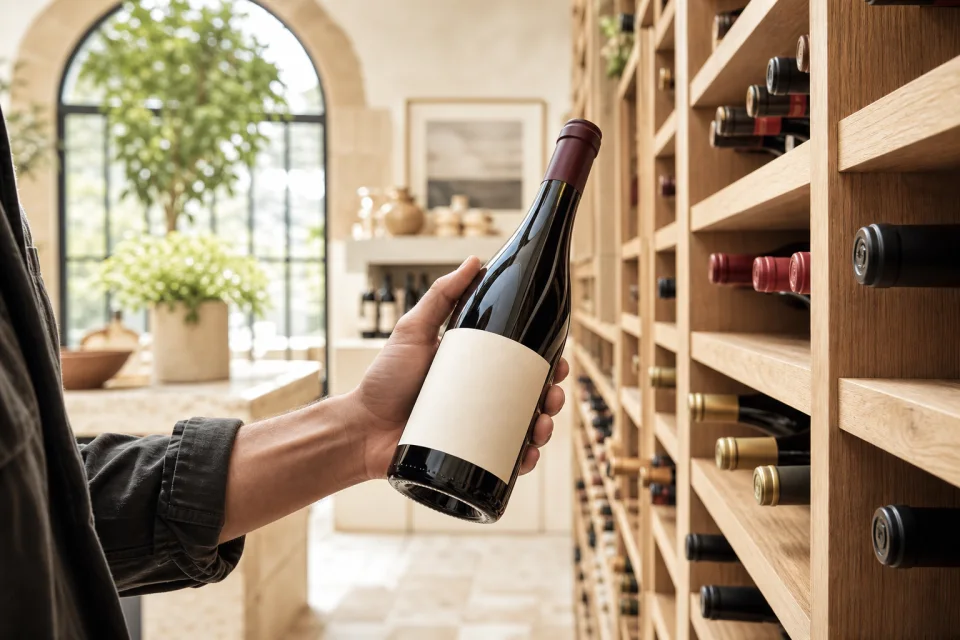
How do you decide which wines go on your shelf? If you are honest, for most wine shop owners it goes something like this: the sales rep visits, you taste a few bottles, you like three of them, you order. Maybe you look at what sold well last month. Maybe you have a feeling that rose will pick up now that the weather is warming. But it is largely intuition, experience, and personal taste.
There is nothing wrong with that -- that intuition is valuable. But it is not enough. Online wine retailers continuously optimize their assortment based on data: sales trends, search behavior, seasonal patterns, click rates. They know exactly what their customers want. The physical wine shop that adopts the same data-driven approach -- combined with the human intuition that online lacks -- has an unbeatable advantage.
The Problem with Gut Feeling
Intuition is a valuable starting point, but it has three systematic weaknesses:
1. Personal preference creates bias
Wine shop owners are wine lovers. That is their strength, but also their pitfall. If you love Barolo, chances are your assortment is stronger in Italian reds than your customer base justifies. You buy what you personally enjoy, not what your customers buy most.
Use your own sales data to check how much shelf space is occupied by low-rotation wines. This prevents slow-moving stock from quietly tying up space and working capital.
2. Sales reps drive your assortment
Wine sales reps are excellent sellers. They come with enthusiastic stories, attractive introductory prices, and sample bottles that are hard to refuse. But their interest is not your interest: they want to sell their portfolio, you want to serve your customers.
That does not mean you should ignore reps -- their offerings can be excellent. But the decision about what to buy should rest with you, supported by data, not with the rep who has the best pitch.
3. Seasonal patterns get missed
Without data you miss patterns that are very real. Rose does not sell "when it gets warm" -- rose starts moving in the first sunny week of March and peaks in June. Full-bodied red stew wines do not peak in "autumn" but specifically in the weeks around the first cold evenings, usually late October. That timing makes the difference between a full shelf and an empty shelf at the right moment.
The Four Data Sources Every Shop Already Has
You do not need to be a data scientist. Most data sources you already have, you just are not using them systematically:
Data source 1: POS sales data
Your register contains gold. Export your sales data monthly (most modern POS systems can do this) and answer four questions:
- Top 20 sellers -- Which 20 wines generate the most revenue? This is your core. Make sure these are always in stock
- Bottom 20 -- Which 20 wines sell worst? This is your ballast. Evaluate: is it the wine (bad choice), the position (invisible on the shelf), or the price (too high for the category)?
- Price range distribution -- How much do you sell in the 5-10 euro category, 10-15, 15-20, 20+? Does that match how much shelf space you give each category?
- Seasonal patterns -- Compare Q1 with Q3. Which categories peak when? Steer your purchasing accordingly
Data source 2: Customer requests
Every time a customer asks for something you do not carry, that is a data point. "Do you have natural wine?" "I am looking for a good Albarino." "Anything from the Jura?" Most shops let this information evaporate.
Solution: keep a notebook at the register (or a note app on your phone) and write down every request. After a month you have a list of concrete gaps in your assortment -- directly from your customers.
Data source 3: QR code scan data
If you have QR codes on the shelf (see our guide to QR codes), you have a rich data source. Scan data tells you:
- Which wines are viewed most -- High scans but low sales? Possibly a pricing or positioning problem
- Which food pairings are popular -- If 30% of your customers search for "wine with BBQ" in May, your BBQ selection needs to be strong
- Peak times -- When are your customers most active? This helps with staffing and tasting event timing
Data source 4: Pairing popularity
Platforms like SommelierX provide insight into which food pairings are most popular in your region. If you know that "wine with pasta" and "wine with cheese" are the two most searched pairings among your customers, you know your Italian assortment and your wine-with-cheese selection need to be strong.
This is data you did not have before. The combination of what customers are cooking and which wine they are looking for is the most direct indicator of what you should stock.
The Assortment Framework: Core, Rotation, and Experimental
A data-driven assortment is not static. It consists of three layers:
Core (60-70% of the assortment)
These are your proven sellers. The wines that sell month after month and that your regular customers expect to find. This layer is stable: you only change it when a wine goes out of production or structurally underperforms.
Characteristics of core wines:
- Sell at least 2 bottles per month
- Are always in stock (never out of stock)
- Cover all basic categories: red, white, rose, sparkling
- Spread across price ranges: entry (5-10), mid (10-18), premium (18+)
Rotation (20-30% of the assortment)
These are wines that change per season or quarter. They keep the assortment fresh and give customers a reason to come back. "What do you have that is new?" is a question you want to hear.
Rotation triggers:
- Season -- Rose and light whites in spring, full reds in autumn
- Holidays -- Champagne and premium gift wines in November/December
- Trends -- Natural wine, orange wine, pet-nat -- if your customers ask for them
- Rep offerings -- This is where the sales rep fits: new discoveries for your rotation layer
Experimental (5-10% of the assortment)
These are your surprise picks. Wines that you personally find fascinating, that your customers do not know, and that strengthen your story as a shop. A Greek Xinomavro, a Hungarian Furmint, a South African Chenin Blanc from an unknown producer.
The experimental layer is where your personal taste and expertise shine. It is also where you differentiate from the supermarket and the webshop. But limit it to 5-10% -- otherwise your assortment becomes a museum instead of a shop.
The Monthly Assortment Review
Collecting data is step 1. Using that data is step 2. Schedule one hour every month for an assortment review. Here is the format:
1. Performance check (20 minutes)
- Review the top 10 and bottom 10 sellers from last month
- Are there shifts compared to the previous month?
- Are there bottom-10 wines that have underperformed for 3+ months? Action: change position, adjust price, or phase out
2. Inventory check (15 minutes)
- Which core wines are (almost) sold out? Reorder immediately
- Which wines have been on the shelf for more than 6 months without selling significantly? Candidates for phase-out or tasting promotion
3. Customer requests review (10 minutes)
- Review collected customer requests from the past month
- Are there patterns? Three requests for "natural wine" = take action
- Plan concrete purchasing actions for the most common requests
4. Seasonal preparation (15 minutes)
- What is coming up? (Easter, BBQ season, Christmas, etc.)
- Which rotation wines need to come in?
- Which seasonal displays will you set up?
Pricing Strategy: The Matrix That Works
A good assortment is not just the right wines -- it is also the right price spread. The most effective price matrix for a wine shop:
- Entry (5-10 euros) -- 25-30% of the assortment. For the daily drinker and impulse purchase. High turnover, lower margin per bottle, but high volume
- Mid-range (10-18 euros) -- 40-45% of the assortment. The sweet spot. This is where most revenue sits and the best balance between volume and margin. This is where your assortment should be strongest
- Premium (18-30 euros) -- 20-25% of the assortment. For the deliberate buyer, the gift, the special occasion. Higher margin per bottle but lower volume
- Luxury (30+ euros) -- 5-10% of the assortment. Prestige, experience, the story. These wines sell slowly but strengthen your positioning as a quality shop
Compare this distribution with your actual sales data. If 50% of your revenue comes from the 10-18 euro category but only 30% of your shelf is dedicated to it, you are leaving money on the table.
Seasonal Cycle: What to Buy When
Based on sales data from hundreds of wine shops, this is the seasonal pattern most shops see:
- January-February: Quiet months. Focus on red wine for winter dishes. Restock low inventory after the holidays. Time for the annual assortment review
- March-April: Rose season begins. Light whites peak around Easter. Start preparing BBQ selection. Tasting season kicks off
- May-June: Peak for rose, white wine, and sparkling. BBQ wines in the spotlight. Longest days = most terrace visits = most spontaneous purchases
- July-August: Rose remains strong. Holiday packs and gift bottles for those visiting friends. Lower volume due to vacations
- September-October: Transition to red. Full-bodied reds for autumn dishes. New vintage moment (order Beaujolais Nouveau). Tasting season restarts
- November-December: Peak of the year. Champagne, premium gift wines, festive packages. Make sure inventory is sufficient -- December is not the time for reorders
The SommelierX Dashboard: What Are Your Customers Looking For?
The most valuable data for assortment decisions is what your customers want, not what they buy. Because what they buy is limited by what you offer. What they want reveals where the demand is -- even if you do not have supply for it yet.
The SommelierX retailer dashboard shows exactly that: which food pairings your customers search for, which wine styles are popular in your region, and which categories are growing. If you see that "wine with Asian food" is the fastest-growing search category in your shop, you know you need to expand your Asian-compatible wines (Riesling, Gewurztraminer, off-dry styles).
That data is the difference between reactive purchasing (what sells well?) and proactive purchasing (what is going to sell well?). And proactive always wins.
Frequently Asked Questions
How do I decide which wines to stock in my shop?
Combine four data sources: POS sales data, customer requests, seasonal trends, and pairing popularity. Data does not replace your wine expertise but supports your decisions with facts instead of feeling alone.
How many wines should a wine shop carry?
Quality over quantity. A well-curated assortment of 200-400 wines outsells an unstructured assortment of 800. The key is breadth across categories combined with depth in your strongest niches.
How often should I refresh my wine assortment?
Keep a core of 60-70% proven sellers that remain stable. Rotate 30-40% per season or quarter. Evaluate monthly which wines have been sitting too long and replace those first.
Know what your customers are looking for?
The SommelierX retailer dashboard shows which pairings and wine styles are popular in your shop. Data-driven purchasing starts here.
Explore options for shops