Valentine's Day Wine: Romantic Pairings for an Unforgettable Evening
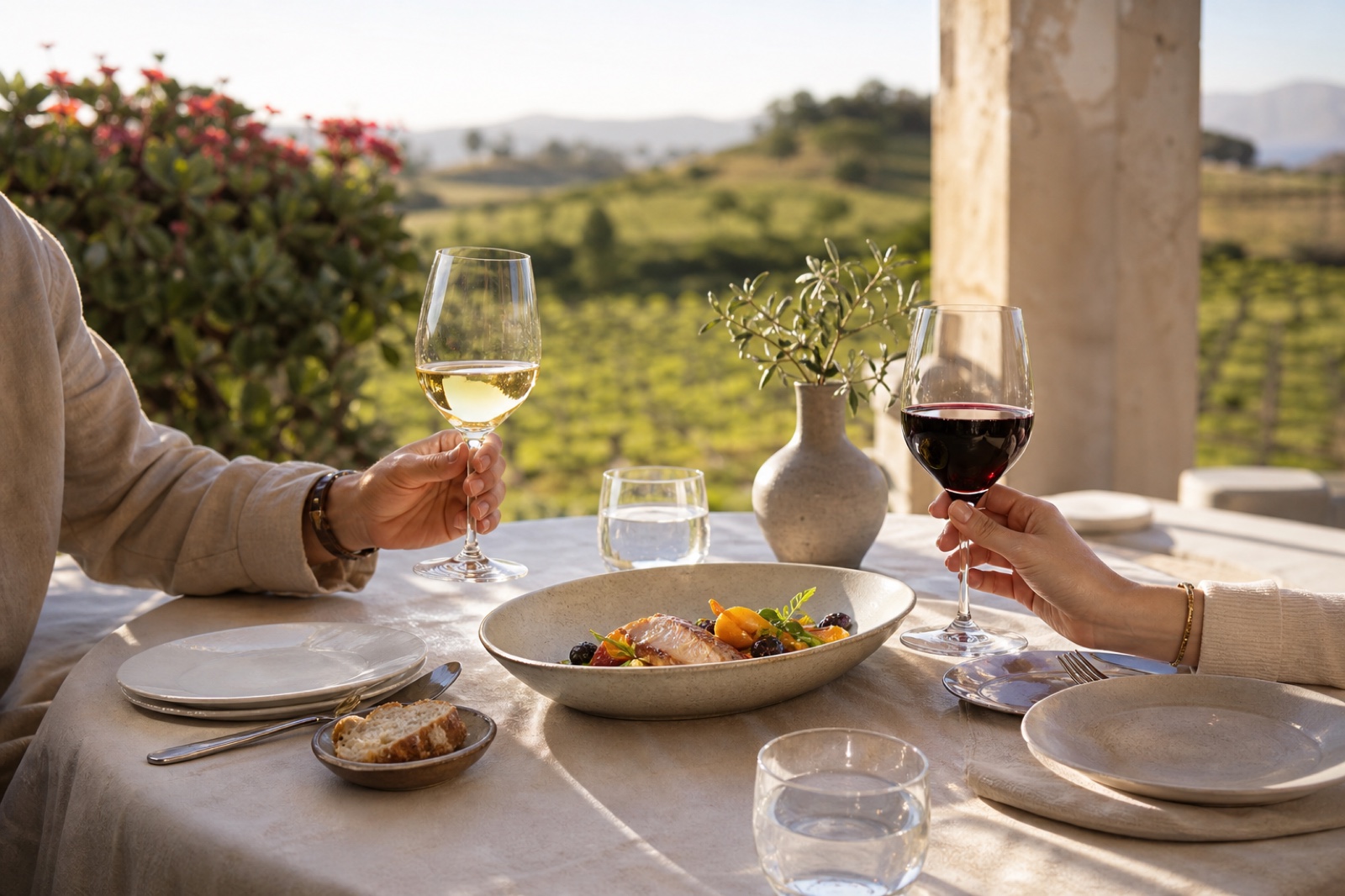
Valentine's Day dinner is not just about the food. It's about the atmosphere, the intention, and the small details that show you cared enough to think it through. The right wine doesn't just taste good with the meal -- it sets the tone for the entire evening.
This guide covers the most popular Valentine's dinner dishes, from the classic (oysters, steak for two) to the ambitious (lobster, chocolate fondant), with specific wine recommendations for each. Plus a one-bottle strategy for those who want simplicity without sacrifice.
Oysters: The Classic Opener
Nothing says romance quite like a platter of fresh oysters on crushed ice. Briny, mineral, delicate -- oysters demand a wine that enhances their oceanic quality without overwhelming it.
Why it works: Oysters are high in zinc and iron, which can create a metallic taste with the wrong wine. Champagne's acidity and effervescence neutralise this, while the wine's mineral character (from chalk soils in Champagne) echoes the oyster's minerality. It's one of the most scientifically precise pairings in existence.
Alternative: Muscadet sur Lie from the Loire Valley. Grown near the Atlantic coast, this wine has a natural salinity that literally tastes like the sea. Less festive than Champagne, but arguably an even better flavour match.
Steak for Two: The Romantic Main
A steak cooked just right, shared across a candlelit table -- it's a Valentine's classic for good reason. The wine choice here depends on the cut and the sauce.
For steak with a red wine reduction sauce, stay in the same family: if the sauce is made with Bordeaux, serve Bordeaux. If it's a mushroom cream sauce, consider a Burgundy Pinot Noir instead -- the earthy notes complement the mushrooms.
Lobster: The Luxury Choice
If you're going all-in on Valentine's dinner, lobster is the ultimate expression of "this evening matters." Buttery, sweet, rich -- lobster needs a white wine with serious weight.
For grilled lobster: The char from grilling adds a smoky dimension. Step up to a richer white Burgundy (Corton-Charlemagne) or consider a vintage Champagne -- the toasty, oxidative notes complement the grilled character beautifully.
Budget alternative: A Viognier from the northern Rhone (Condrieu is the benchmark, but any good Viognier works). Stone fruit, floral notes, and a rich texture that stands up to lobster without the Burgundy price tag.
Pasta: The Home-Cooked Romance
Not everyone does lobster on Valentine's Day. A beautifully made pasta for two -- cooked together, served with candles and care -- can be just as romantic. The wine depends entirely on the sauce.
Truffle pasta (tagliatelle al tartufo)
Seafood linguine
Classic bolognese
For more pasta pairing ideas, see our complete pasta and wine pairing guide.
Chocolate Dessert: The Sweet Finale
Valentine's Day and chocolate are inseparable. Whether it's a molten chocolate fondant, a rich chocolate mousse, or hand-made truffles, the wine needs to be sweet enough to match.
For chocolate-covered strawberries: Champagne Rose Demi-Sec. The slight sweetness matches the chocolate, the bubbles provide contrast, and the rose colour keeps the Valentine's aesthetic alive. This is a pairing that looks as good as it tastes.
Champagne vs Prosecco: The Romance Debate
Both are sparkling, both are festive, but they're very different wines. Which one belongs on the Valentine's table?
Champagne
- Flavour profile: Toasty, yeasty, complex, with fine persistent bubbles
- Mood: Elegant, luxurious, special occasion
- Pairing range: Extremely versatile -- works from oysters through to strawberries
- Price: EUR 30-60+ for quality non-vintage
Prosecco
- Flavour profile: Fresh, fruity, floral, with softer bubbles
- Mood: Fun, approachable, cheerful
- Pairing range: Best with lighter appetisers, fruit, light desserts
- Price: EUR 8-15 for quality DOCG
Our take: For Valentine's Day specifically, Champagne wins. Not because of snobbery, but because the complexity and depth of Champagne matches the intentionality of the evening. Prosecco is wonderful for casual celebrations, but Valentine's is the one night a year where the extra investment in Champagne pays off emotionally and gastronomically.
The One-Bottle Strategy
Don't want to juggle multiple bottles? Here's the single wine that works for an entire Valentine's dinner from appetiser to dessert:
A good Champagne Rose has enough red fruit character to pair with meat, enough acidity for seafood, and enough prestige to make the evening feel special. It's also visually stunning in the glass -- the pale salmon-pink colour is inherently romantic.
Budget one-bottle strategy: Cremant de Bourgogne Rose. Same method, similar quality, at roughly one-third the price of Champagne. It's made with the same Pinot Noir and Chardonnay grapes, and delivers an impressive performance for the price.
Setting the Wine Scene
A few practical tips to make the wine part of Valentine's evening effortless:
- Chill whites 2 hours in advance, sparkling wines 3 hours. Nothing kills romance faster than warm Champagne.
- Open reds 30-60 minutes before serving to let them breathe. Pour a small amount into each glass and let it sit.
- Use proper glasses. You don't need expensive crystal, but the right shape makes a real difference. Flutes for Champagne, wider bowls for red.
- Don't over-pour. A third of the glass is right. It leaves room for swirling, allows the aromas to concentrate, and means the wine stays at the right temperature longer.
- Have water on the table. Between wines, between courses, always. It cleanses the palate and keeps you both hydrated. Wine is more enjoyable when you're not dehydrated.
Plan your Valentine's wine
Enter your Valentine's dinner menu into SommelierX and get scored wine recommendations for every course. From oysters to chocolate, calculated, not guessed.
Try SommelierX FreeOr get the app:

Frequently Asked Questions
What is the most romantic wine?
Champagne Rose is widely considered the most romantic wine -- the pale pink colour, the fine bubbles, and the association with celebration create an atmosphere that no other wine quite matches. For red, an aged Burgundy Pinot Noir has an elegance and subtlety that feels intimate rather than showy. For white, a great Meursault has a luxurious, sensuous quality that sets it apart.
How much wine for a Valentine's dinner for two?
One bottle per course is overkill. For a typical 3-course Valentine's dinner, plan for 2 bottles total: one sparkling or white for the starter, one red for the main. If you're adding a dessert wine, a half bottle (375ml) is plenty for two people -- you'll each get 2-3 generous pours. Or follow the one-bottle strategy above with Champagne Rose.
What wine goes with Valentine's chocolate?
Dark chocolate: Banyuls or Pedro Ximenez Sherry. Milk chocolate: Ruby Port or Maury. White chocolate: Moscato d'Asti or late-harvest Riesling. The golden rule is that the wine must be at least as sweet as the chocolate. Dry wine with sweet chocolate tastes bitter and hollow. See our full chocolate and wine guide for more.
Is it okay to serve just one wine all evening?
Absolutely. The one-bottle approach is elegant in its simplicity. Choose a versatile wine (Champagne Rose, a good Burgundy, or even a premium Cremant) and let it accompany the entire meal. The romance is in the company, the food, and the thought you put into the evening -- not in how many bottles you opened. For more wine tips, explore our date night wine guide.