Wine with BBQ: The Complete Guide for the Barbecue
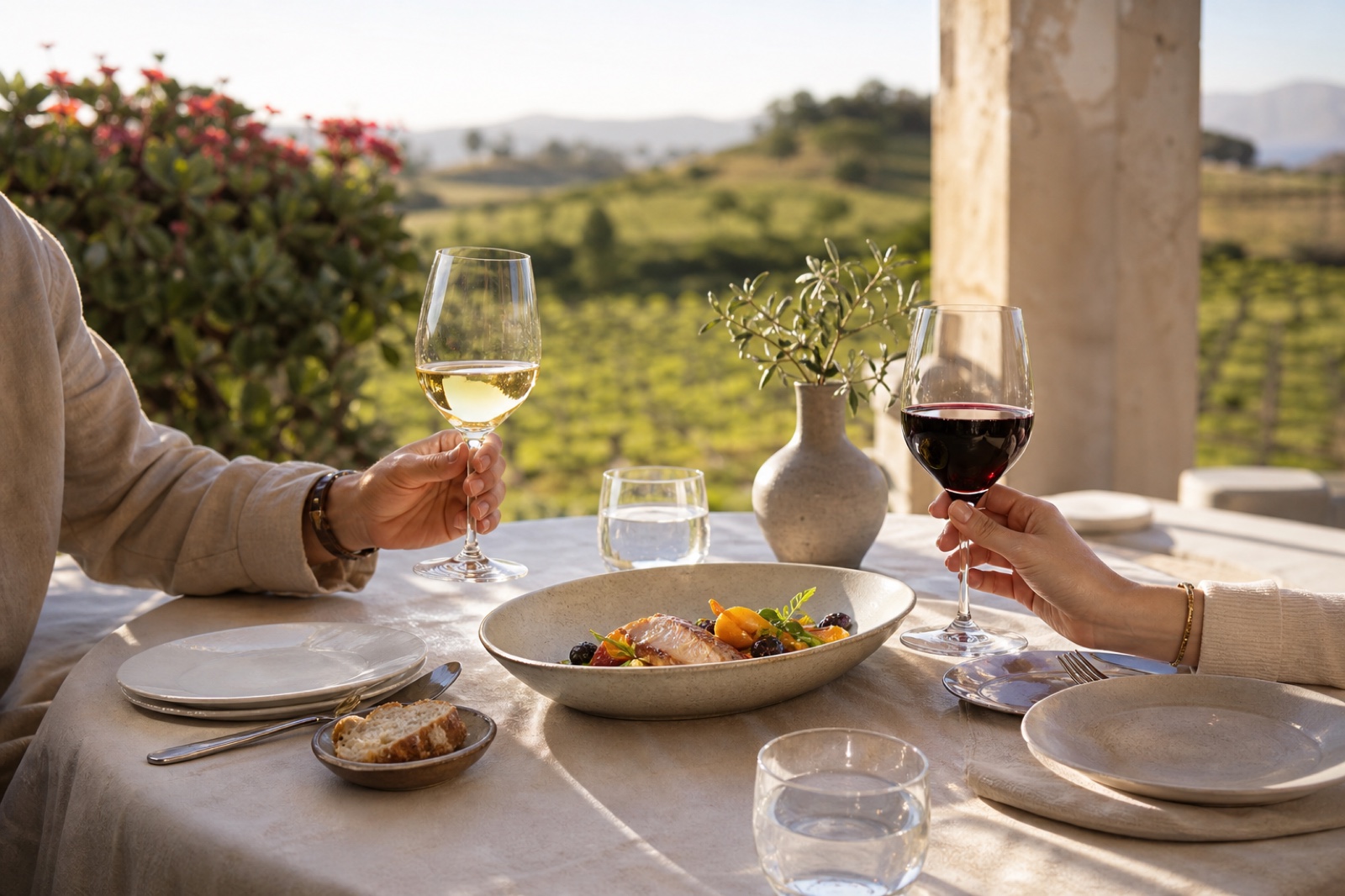
The barbecue is lit, the neighbors are invited, the meat is ready. But which wine with your BBQ? Many people automatically reach for beer, but wine and barbecue make a fantastic combination — provided you make the right choice.
The secret: BBQ is not one dish, but an entire spectrum. A burger off the grill calls for a completely different wine than grilled prawns. The marinade plays a role, the wood type influences the smoke flavor, and even the temperature of your wine matters. In this complete guide we walk through every type of wine and barbecue combination.
Wine with BBQ Beef: Burgers, Steak and Brisket
Beef on the barbecue is the classic. Whether it is a juicy burger, a well-grilled rib-eye or a six-hour smoked brisket — you need a wine that can match the intensity of the meat and complement the smoke aromas.
With beef from the BBQ you are looking for wines with dark fruit, firm structure and a hint of spice. The smoky flavor from the grill calls for a wine that itself has some depth and warmth.
Recommendations per dish
- Burger: Zinfandel (fruity, spicy, not too heavy) or a Cotes du Rhone (supple, versatile)
- Rib-eye / Entrecote: Malbec (full, dark fruit) or Cabernet Sauvignon (structure, cassis)
- Brisket (smoked): Shiraz from the Barossa Valley (smoke, black pepper, concentration) or Tempranillo Reserva (leather, tobacco, dark fruit)
- Bavette / Flank steak: Carmenere (spicy, dark fruit, a hint of green pepper)
The keyword with beef from the BBQ is body. You want a wine that is at least as full-bodied as the meat. A light Pinot Noir disappears next to smoked brisket. But a bold Shiraz? That dances along.
Wine with BBQ Pork: Ribs and Pulled Pork
Pork on the barbecue has a unique challenge: the marinades and sauces. Wine with ribs is as much about the BBQ sauce as the meat itself. Most BBQ sauces are sweet, smoky and slightly spicy — a combination that calls for specific wine characteristics.
You are looking for a wine with enough fruit to match the sweetness of the sauce, enough structure to cut through the fat of the pork, and a hint of spice that complements the smoke aromas.
Recommendations per dish
- Ribs (BBQ sauce): Grenache, Shiraz or a fruity Zinfandel
- Pulled pork: Rose from Provence (surprisingly good!) or a light Pinot Noir
- Pork chops: Chenin Blanc (if simply seasoned) or Barbera (with a tomato-based marinade)
- Sausage / bratwurst: Beaujolais (Gamay), lightly chilled. Fresh, fruity, excellent with grilled sausage.
Note: with very sweet BBQ sauces (think Texas or Kansas City style) a wine with a touch of residual sweetness works surprisingly well. An off-dry Riesling Spatlese with sticky ribs is a combination you will not forget in a hurry.
Wine with BBQ Chicken
Chicken from the barbecue is lighter than beef or pork, but the grill gives it a smoky, caramelized character that you do not find with oven-roasted chicken. The wine choice depends heavily on the marinade.
Recommendations per variation
- Plain chicken / lemon marinade: Chardonnay (oaked), Viognier or a full-bodied rose
- Chicken with BBQ sauce: Rose from Tavel or a light Grenache
- Piri-piri chicken / spicy: Off-dry Riesling or Gewurztraminer (the sweetness tempers the heat)
- Chicken satay: Riesling (the sweetness matches the peanut sauce) or Viognier (blossom + nuts)
The golden rule for BBQ chicken: think in terms of middleweight. Not too light (the wine disappears behind the smoke) and not too heavy (the wine overpowers the meat). Rose is almost always a safe choice.
Wine with BBQ Fish and Seafood
Fish on the barbecue is a different story. The smoke is more subtle, the flesh more delicate, and the cooking time shorter. You want a wine that does not overshadow the fish but does complement the grill flavor.
Recommendations per dish
- Grilled salmon: Pinot Noir (light!) or a full-bodied Chardonnay
- Prawns: Albarino, Vermentino or Sauvignon Blanc
- Tuna steak: Rose or a light Pinot Noir (tuna can handle red wine)
- Sea bass / sea bream: Chablis, Verdicchio or Gruner Veltliner
- Grilled octopus: Assyrtiko from Santorini (mineral, saline, smoky)
Important with BBQ fish: serve the wine a bit colder than usual. The heat from the barbecue environment warms your glass quickly. Start at 6-8 degrees for white wine and you will have a strong temperature window throughout the meal.
Wine with BBQ Vegetables
Grilled vegetables deserve more attention than they get. Bell peppers, zucchini, eggplant, corn on the cob, mushrooms — on the barbecue they become caramelized, smoky and intensely flavorful. That makes them excellent pairing partners.
Recommendations per vegetable
- Grilled bell pepper: Verdejo, Sauvignon Blanc or a young Tempranillo
- Eggplant: Light Pinot Noir or Nero d'Avola (earthy tones match)
- Mushrooms (portobello): Pinot Noir or Nebbiolo (earth + mushrooms = magic)
- Corn on the cob with butter: Chardonnay (the buttery tones complement each other)
- Grilled asparagus: Sauvignon Blanc or Gruner Veltliner (green tones)
The Impact of Marinades and Sauces on Your BBQ Wine
One of the most underestimated factors in wine and barbecue pairing is the marinade or sauce. The same chicken with three different marinades calls for three different wines.
- Classic BBQ sauce (sweet, smoky): Fruit-forward wines with body. Zinfandel, Grenache, Shiraz.
- Chimichurri (herbs, garlic, vinegar): Wines with high acidity and green tones. Malbec (yes, Argentine!), Sauvignon Blanc, Vermentino.
- Teriyaki (sweet, soy, ginger): Off-dry wines or wines with low tannin. Riesling, Gewurztraminer, Pinot Noir.
- Lemon-garlic: Dry, crisp wines. Albarino, Chablis, Verdicchio.
- Dry rub (spices, no sauce): More freedom. Choose based on the meat itself, with a slight preference for spicier wines.
The rule of thumb: the sauce determines the wine, not the meat. Chicken with teriyaki sauce calls for a completely different wine than the same chicken with chimichurri. Keep that in mind. Just like with pasta, where the sauce also drives the wine choice.
Practical Tip: Wine at the Right Temperature for the BBQ
This is the tip that makes the difference between a good and a fantastic BBQ wine experience: lightly chill your red wine.
At an outdoor temperature of 25+ degrees, your wine heats up quickly in the glass. Red wine that starts at room temperature is too warm within ten minutes — making the alcohol taste sharp and the fruit disappear.
- Red wine at BBQ: 30 minutes in the fridge before serving. Target: 14-16 degrees.
- Rose at BBQ: Straight from the fridge. Target: 8-10 degrees.
- White wine at BBQ: Straight from the fridge, in a wine cooler on the table. Target: 6-8 degrees.
Invest in a simple wine cooler or use a bucket with ice and water. Your guests will taste the difference.
BBQ Season: Tips for Wine Shops
BBQ season is the right time to promote wine as an alternative to beer. Place a display near the BBQ products with a QR code linking to pairing advice -- customers scan and discover which wine pairs with their ribs, burgers or grilled vegetables.
With SommelierX for Shops you give customers personal wine advice via their phone. No extra staff needed, no wine expertise required. From EUR 19/month.
Your BBQ, the matching wine to match
Enter your BBQ dish (including marinade!) and SommelierX calculates the match across 19 wine dimensions and 17 dish dimensions. Or snap a photo of the grill.
Try SommelierX FreeOr get the app:

Frequently Asked Questions
Which wine pairs best with ribs?
Grenache (Garnacha) or a fruity Zinfandel. The ripe fruit matches the sweet BBQ sauce, and the spicy tones complement the smoke flavor. With very sweet sauces an off-dry Riesling works surprisingly well.
Can you drink red wine with grilled fish?
Yes, with fattier fish like grilled salmon or tuna steak a light red wine works excellently. Pinot Noir is the safest choice. With more delicate fish (sea bass, sea bream) you are better off with white wine.
Should I chill red wine for a BBQ?
Absolutely. In warm weather red wine heats up quickly in the glass, making it taste flat and overly alcoholic. Put the bottle in the fridge for 30 minutes before serving, so you start at 14-16 degrees.
Which wine pairs with a mixed BBQ?
When there is a bit of everything on the grill, choose versatile wines: a full-bodied rose, a Grenache blend from the Rhone, or a Cotes du Rhone. These pair with both meat and vegetables.